


I wasn’t the kind of person who needed help. I paid my bills. I showed up for meetings. I made it to the gym—most days. From the outside, I looked fine. Maybe even good. But on the inside? I was constantly managing a low-grade panic. Afraid someone would see through me. Afraid I was one slip-up away from losing control.
When I finally walked into an intensive outpatient program, I thought I’d be the outlier. I thought I’d meet people who had hit “real” rock bottoms—DUIs, job loss, families on the brink. But the truth was harder to swallow. Because in that room, I saw versions of myself. And I couldn’t hide anymore.
“Tired” Was My Excuse for Everything
I wasn’t sleeping well. I wasn’t eating like I should. My drinking was creeping up, but not enough (in my mind) to be a problem. I blamed burnout. Stress. The economy. Anything but the truth.
It wasn’t until someone in group said, “I keep everything just functional enough that no one notices,” that it hit me. I wasn’t functioning. I was performing. The two are not the same.
I’d tell myself I had it under control. But the truth was—I was scared of what might come out if I stopped moving, stopped numbing, stopped pretending.
What I Thought IOP Would Be—and What It Actually Was
I expected the program to be soft. Safe. Maybe a little too therapy-lite. But Greater Boston Behavioral Health’s intensive outpatient program didn’t hold my hand. It held up a mirror.
IOP didn’t coddle me. It confronted me. In that first week alone, I sat across from strangers who told the truth in ways I hadn’t dared to. I heard people say things I’d only ever thought in secret. And slowly, that gave me permission to stop hiding behind my curated image.
We didn’t just talk about coping skills and triggers. We talked about identity. About how exhausting it is to be the person everyone relies on while quietly unraveling inside. The program peeled away the armor—and underneath, I found someone scared, tired, and deeply in need of help.
The Lies I Lived By
Everyone in that room had their own set of lies. Here were mine:
- “I’m just a high achiever—I need something to take the edge off.”
- “If I can still go to work and take care of my responsibilities, I’m not that bad.”
- “I’ll slow down when things calm down. This is just a rough patch.”
- “Therapy is for people who can’t handle things. I’m not there.”
Sound familiar?
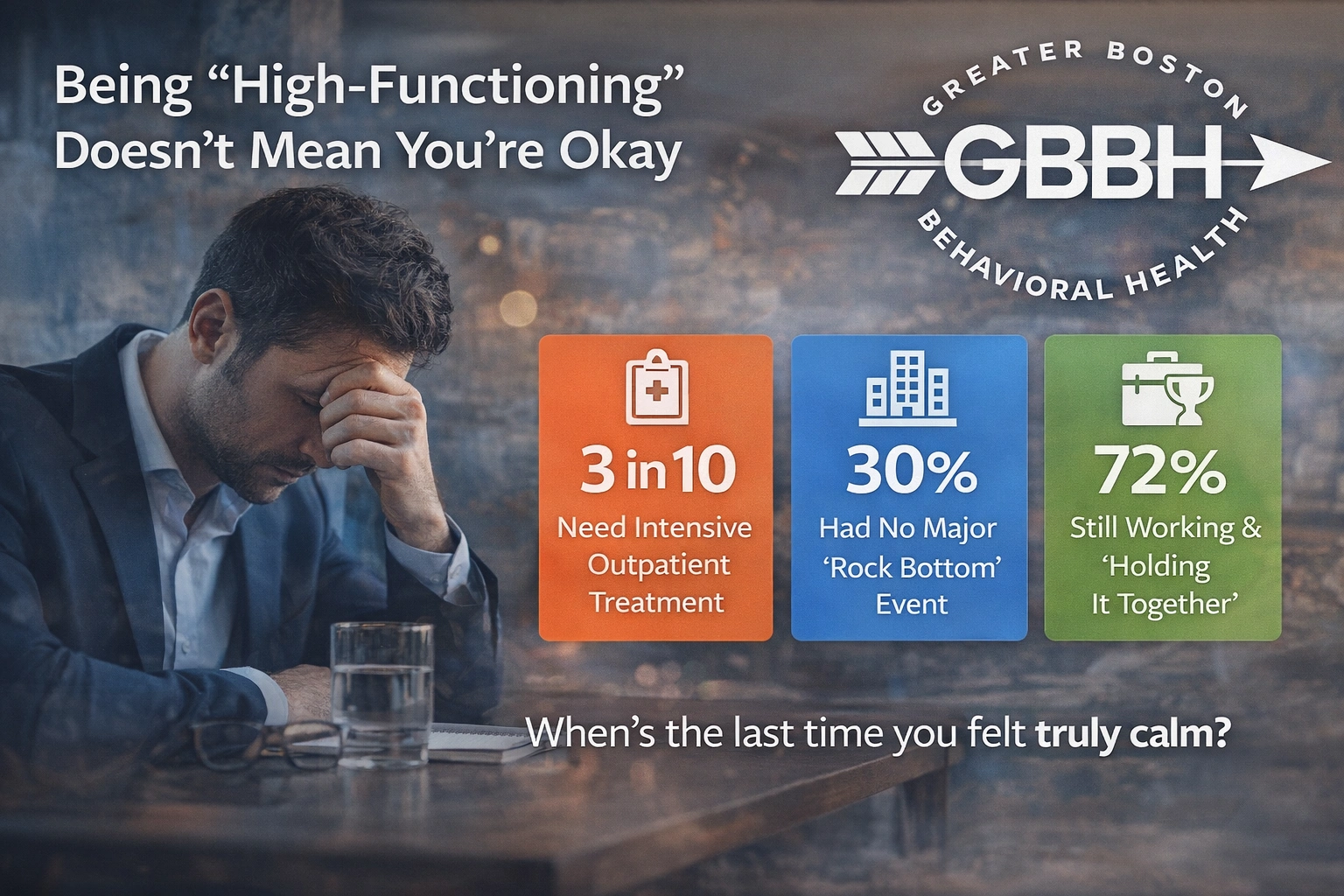
The problem with high-functioning addiction is that it rewards you—for a while. You’re productive. You’re efficient. People praise your work ethic. No one questions the cost. But eventually, your insides don’t match your outside. And that gap gets harder to live with.
Group Broke My Defensiveness
There was a guy in group—suited, polished, CFO type—who said something I’ll never forget:
“The scariest thing wasn’t getting caught. It was realizing I didn’t know who I was without the pressure.”
That line lived in my head for weeks. Because that’s exactly what I was afraid of too. What would be left if I put the drink down? If I didn’t chase the next win? If I didn’t hold everything together for everyone?
Group became the only place where I didn’t have to perform. Where being tired, confused, ashamed—or just plain unsure—was okay. It was one of the few spaces where honesty felt safer than pretending.
Showing Up Became My New Metric for Success
The first few weeks of IOP, I still wore my “together” face. Showed up early. Took notes. Tried to “do it right.” But little by little, I started to let that go. I realized showing up wasn’t about performance. It was about being present.
One night, I left group and sat in my car without turning on music or checking my phone. I just sat there. Quiet. And it was the first time in years that I didn’t feel the urge to drink to “wind down.” It was small, but it was everything.
That’s the thing about IOP. It’s not about dramatic breakthroughs every day. It’s about small shifts that, over time, rebuild your life from the inside out.
Dedham, Massachusetts Taught Me That Recovery Can Begin Before Rock Bottom
A lot of people in IOP—especially high-functioning folks—wait until things completely fall apart before asking for help. But that’s not required. In fact, waiting can make things worse.
The truth? You don’t have to lose everything to change something. You don’t have to crash your car, get divorced, or ruin your career to deserve support. IOP is for people who are still standing—but barely.
For me, attending an intensive outpatient program near Dedham, Massachusetts was the first time I admitted to myself that “holding it all together” wasn’t working anymore. And that maybe there was another way.
You Deserve Help Even If You’re Still “High-Functioning”
This one took time to believe. I thought support was for people who had no other options. But IOP showed me that being the go-to person, the achiever, the one who “never lets things fall through the cracks”—that person needs help too.
Sometimes more than anyone else. Because the higher the pedestal, the harder the fall.
And Then There Was Hope
Eventually, something shifted. I wasn’t waking up in dread. I wasn’t waiting for someone to expose me. I was still tired, still doing the work—but I was honest. I was known. And that made all the difference.
I found out that healing doesn’t look like being “fixed.” It looks like being real. And real feels a hell of a lot better than pretending.
IOP gave me the space to figure out what kind of life I wanted to come home to. And for the first time in years, I actually wanted to come home to myself.
Needham, Massachusetts Clients Deserve More Than Just Functioning
If you’re living in or near Needham, Massachusetts and you’ve been telling yourself “I’m fine” while quietly unraveling, know this: functioning is not the same as living.
It’s okay to want more than white-knuckled survival. It’s okay to ask for support before everything falls apart. And it’s more than okay to tell the truth—even if you don’t know what comes next.
An intensive outpatient program might not be the first option you think of. But it could be the one that finally lets you breathe.
FAQs About Intensive Outpatient Programs (IOP)
What is an Intensive Outpatient Program (IOP)?
An IOP is a structured treatment option that allows people to receive intensive therapy and support while still living at home and maintaining daily responsibilities. It typically includes group therapy, individual counseling, and skill-building sessions multiple days a week.
How is IOP different from inpatient treatment?
Inpatient programs require a full-time stay at a facility, while IOP allows participants to live at home and attend treatment sessions during scheduled hours. It’s often a step-down from inpatient care or a starting point for those who don’t require 24/7 supervision.
Who is IOP for?
IOP is ideal for people struggling with mental health or substance use who need more support than weekly therapy but don’t require inpatient care. It’s especially useful for high-functioning individuals whose struggles may be less visible—but no less serious.
Can I work while attending IOP?
Yes. Many people continue to work or attend school while participating in an IOP. Programs are often scheduled in the morning, evening, or even virtually to accommodate different lifestyles.
What can I expect in a typical IOP session?
Sessions often include a mix of group therapy, cognitive-behavioral exercises, relapse prevention strategies, and peer support. You’ll explore patterns, build coping tools, and begin developing a new relationship with yourself.
How long does an IOP program last?
Program lengths vary but typically run 6–12 weeks, with 3–5 sessions per week. The exact duration depends on individual needs and progress.
You don’t need to crash to qualify for help.
If you’re keeping up appearances while silently suffering, I see you. I was you. And I can tell you—there’s more waiting for you on the other side of honesty than fear.
Call (888) 450-3097 to learn more about our intensive outpatient program in Boston, Massachusetts.
