


Sometimes, it feels like you’ve done everything a parent can possibly do—and somehow, you’re back in this place. The sadness in your child’s eyes. The missed calls. The late mornings. The familiar ache that says: something’s wrong again.
If your 20-year-old has relapsed into depression, you’re likely carrying a heartbreak no one else quite sees. You’re not naïve. You’ve been here before. But this time, it’s harder to find hope.
At Greater Boston Behavioral Health’s Depression Treatment program, we work with families just like yours—parents holding the weight of fear, guilt, and love. Here’s how depression treatment can support your family through the delicate, confusing terrain of relapse.
Relapse in Depression Isn’t Rare—But It Still Hurts
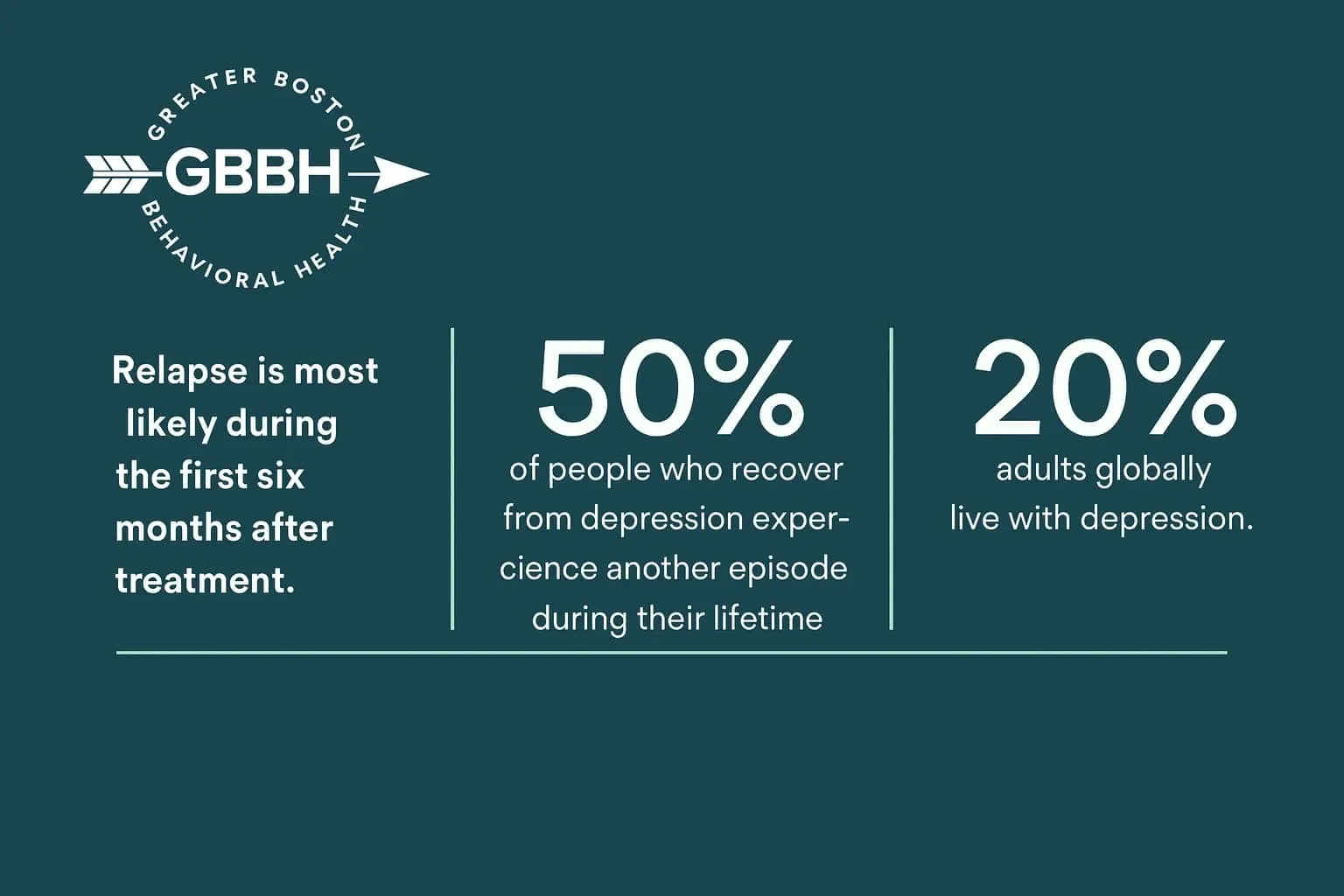
Depression isn’t a one-time illness. It’s a condition that can ebb and flow. Some people stabilize quickly and stay well for years. Others, especially young adults navigating early adulthood, may experience cycles of improvement and decline.
That’s not a reflection of failure.
Relapse doesn’t mean your child didn’t try. It doesn’t mean treatment didn’t work. It means depression is still active—and more support is needed.
A structured depression treatment program in Boston can offer that next layer of care, with intensive support, monitoring, and therapy that adjusts to your child’s current reality—not just their past success.
Signs Your Young Adult May Be Relapsing
Every family knows their child best, but here are some signs that often indicate a return of depression symptoms:
- Increased isolation or withdrawal from friends and family
- Avoiding responsibilities, work, or school
- Sleeping too much or not at all
- Major appetite changes or weight fluctuations
- Frequent irritability, numbness, or hopelessness
- Refusing therapy appointments or medication
- Expressing dark thoughts or suicidal ideation
Even subtle shifts in your child’s patterns—like sleeping past noon every day or avoiding eye contact at dinner—can be early red flags. You don’t need to wait for a crisis to take action.
What a Depression Treatment Program Offers After Relapse
When a relapse occurs, many families feel like they’re back at square one. But relapse isn’t the same as starting over—it’s starting from a place of more knowledge.
A well-rounded depression treatment program offers more than weekly therapy. It provides a structured space where your loved one can stabilize emotionally, build coping skills, and reconnect with themselves and others.
Here’s what that often includes:
Clinical Reassessment
Symptoms evolve. What worked before may no longer fit. Our team can reassess mood symptoms, medication effectiveness, co-occurring conditions like anxiety, and the impact of life stressors.
Daily Structure
Consistency is key after a relapse. Programs like ours offer daily group and individual sessions, mindfulness work, and emotional processing activities—especially beneficial in our PHP and IOP options in Needham and Dedham.
Peer Support
Relapse can isolate people. Being in a group of others working through similar challenges reduces shame and fosters accountability.
Family Involvement
At GBBH, we offer family therapy and psychoeducation sessions so you’re not left guessing. We help families learn how to stay connected without taking over.
How Depression Treatment Differs From Weekly Therapy
Weekly outpatient therapy plays a valuable role—but after relapse, your child may need something deeper. A depression treatment program bridges that gap.
| Feature | Weekly Therapy | Depression Treatment Program |
|---|---|---|
| Frequency | 1x per week | 3–5 days per week |
| Support | Therapist only | Therapist, psychiatrist, case manager, peer group |
| Intensity | Maintenance level | Clinical stabilization + active skill-building |
| Structure | Client-driven | Structured schedule with accountability |
If your child is disengaging from weekly therapy or feels stuck in old patterns, this next step can be the lifeline that reconnects them to their strength.
“I Thought We Were Past This”: The Guilt of the Second Time
It’s common for parents to think: We already did this. We paid for care. We made the sacrifices. Why didn’t it work?
But healing isn’t linear. Especially in young adulthood, when life is turbulent and identities are still forming, depressive episodes can return even after a period of stability.
What matters now is this: You noticed. You care. You’re still here.
That’s not weakness. That’s resilience.
No treatment guarantees immunity from struggle. But staying engaged, even when hope feels fragile—that’s the anchor.
Your Role as a Parent Is Still Powerful
Even when your child is legally an adult. Even when they roll their eyes. Even when they don’t return your texts for a week.
You still matter.
In fact, research consistently shows that parental involvement—even from a distance—can increase treatment engagement and reduce relapse severity.
You can:
- Encourage without controlling
- Set boundaries without withdrawing love
- Ask questions without interrogating
- Let go of outcomes without giving up
And if that feels impossible? That’s okay too. We support parents as well as clients, because no one gets through this alone.
Looking for Local Depression Treatment Program Support?
Families around Greater Boston often feel unsure where to turn—especially after a setback.
If you live near Dedham or Newton, our team offers both virtual and in-person assessments to help determine whether a depression treatment program is right for your loved one.
Whether you’re reaching out for the first time or the third—it’s always the right time to seek help.
FAQs About Depression Relapse and Treatment
Q: Does relapse mean my child didn’t try hard enough?
A: Absolutely not. Depression is a medical condition, not a willpower issue. Relapse often reflects how stress, biology, or life changes are impacting your child—not a lack of effort.
Q: Can we avoid hospitalization?
A: Many families worry about this. Our depression treatment program is designed to provide intensive outpatient care (PHP and IOP) as an alternative to inpatient hospitalization—ideal for those who need daily structure but not 24/7 monitoring.
Q: What if my child refuses to go back to treatment?
A: You can’t force readiness—but you can open the door. Gentle, non-shaming conversations, offering options, and involving a care team (like us) can all help your child feel safe enough to consider re-engagement.
Q: How do I know if a depression treatment program is enough—or too much?
A: That’s where our clinical assessment comes in. We’ll talk with your child (and you, if helpful) to determine the right level of care. Sometimes it’s a tune-up. Sometimes it’s a re-commitment. Either way, we’ll guide you.
Q: What about medication?
A: If your child is already on medication, we’ll review how it’s working and whether any changes are needed. If they’re not, we’ll discuss options and ensure any decisions are collaborative—not forced.
A Final Word for the Parent Who’s Tired
We see you.
You’re not new to this—but that doesn’t make it easier. You’re holding hope like glass: carefully, protectively, afraid of how easily it can slip.
Just know this: You don’t have to hold it alone.
Call (888) 450-3097 or visit our Depression Treatment program in Boston, Massachusetts to learn more about the services we offer. Whether you’re asking questions, scheduling an assessment, or just need a place to start—we’re here. For you, and for them.
