


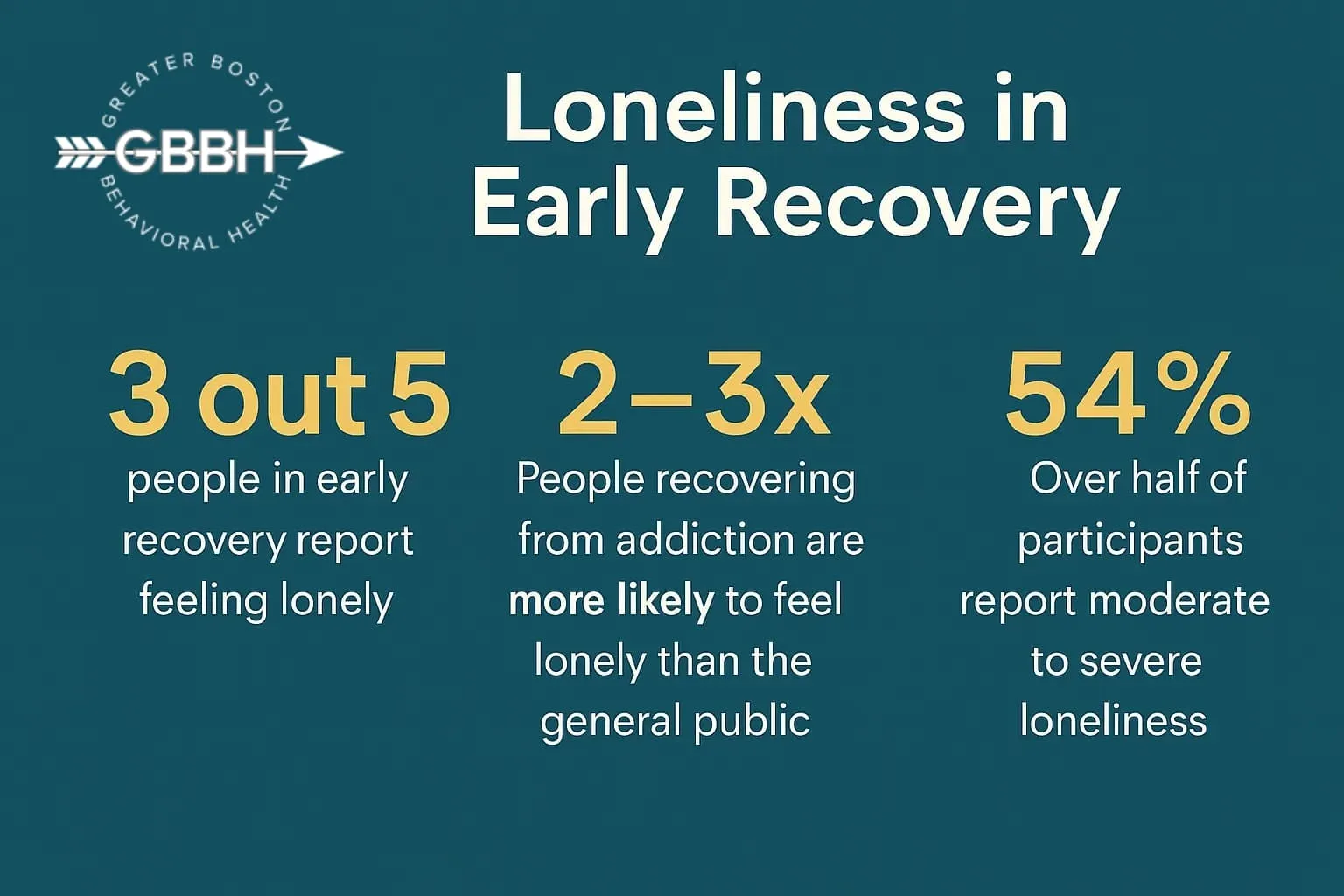
When you’re newly sober—or just starting to feel emotions again after being numb for so long—it’s not just hard. It can feel impossibly lonely.
Maybe you’ve walked away from old friend groups because they were tied to using. Maybe you’re back in your childhood home, feeling like a stranger to your parents. Or maybe you’re surrounded by people… and still feel like no one truly sees you.
In early recovery, loneliness isn’t just a side effect. It’s part of the experience. At Greater Boston Behavioral Health, we work with individuals navigating this exact stage—where the fog is lifting, but the weight of isolation still lingers.
If you’re asking yourself, Can a depression treatment program help me feel connected again?, the short answer is: yes. But not in the way most people think.
Let’s explore what that really means—through honest answers to the questions you may not feel ready to ask out loud.
Can a Depression Treatment Program Actually Help Me Connect With Others?
Yes—and not just socially, but emotionally.
Connection doesn’t start with friend requests or group chats. It starts with safety. Depression treatment programs are designed to help you feel safe enough to be seen, heard, and understood—without pressure to perform or pretend.
When you’re healing from depression and entering recovery, it can feel like everyone else knows how to “do life” except you. But in a structured treatment setting, you’re surrounded by people who are also figuring it out. That alone can soften the isolation.
You’re not expected to become instantly open or outgoing. You’re simply given space to be human—with others who are doing the same.
I Don’t Trust People. Is That a Problem?
Not at all. That’s incredibly common.
Depression can make it hard to trust anyone—including yourself. Recovery can feel like you’re walking around with no skin on. The idea of opening up to new people might feel exhausting or even dangerous.
The good news is: we don’t expect you to trust right away. Our depression treatment program in Boston creates consistency first—through structured groups, regular check-ins, and a care team that doesn’t push, but invites.
Trust isn’t forced. It’s earned. And we take that seriously.
What If I’ve Hurt People—or Been Hurt—and Don’t Know Where to Start?
You’re not broken for feeling that way. You’re just human, with a past like everyone else in recovery.
In our work with clients from Waltham to Wellesley, we’ve seen how depression and substance use can leave behind complicated relationship dynamics—estrangement from family, lost friendships, unspoken pain.
You don’t have to fix everything right away. Treatment helps you slow things down, explore what happened, and begin to understand what’s yours to carry—and what isn’t.
Rebuilding doesn’t always mean going back. Sometimes, it means learning how to relate in healthier, more grounded ways to new people, too.
Can Group Therapy Really Help With Loneliness?
It’s one of the most effective tools we have.
You might not believe it yet—but sitting in a room with others who are also navigating early recovery can be one of the most healing experiences available.
You don’t have to speak right away. Many people just listen at first. But hearing someone else say the thing you’ve been thinking? That’s powerful. It chips away at the shame. It says, You’re not the only one.
At Greater Boston Behavioral Health, we prioritize group safety and emotional accessibility. Our clinicians lead with warmth, clarity, and compassion—never force. And many clients who start off silent find themselves forming genuine connections over time.
I’m Afraid I’m Too Awkward, Too Quiet, or Just Not Likeable Enough
That fear? It’s more common than you think. Depression is cruel that way. It convinces you you’re somehow “other”—less lovable, less interesting, less wanted.
But the truth is: you don’t have to be perfect to be liked. You don’t even have to be talkative. Often, it’s the quiet presence, the small nods, the moments of shared eye contact that plant the seeds of friendship in treatment.
You don’t need to become someone else to make friends in recovery. You just need to show up.
What About Old Friends? Should I Reach Out or Move On?
It depends—and treatment can help you sort that out.
Some old friendships are worth repairing. Others were built around using, drama, or avoidance. A depression treatment program helps you figure out which relationships are healthy, which ones are harmful, and how to engage (or let go) with clarity and self-respect.
In our Boston program, we also support clients through:
- Letter-writing exercises (even if they’re never sent)
- Role-playing tough conversations
- Boundary-setting practice
- Emotional safety planning for future interactions
You don’t have to face those conversations alone. And you don’t have to decide everything at once.
How Do I Start Making Friends Again—Especially in My 20s or 30s?
It feels awkward. There’s no way around that. Making friends as an adult, especially while navigating recovery, can feel like learning to walk again in a world where everyone else is sprinting.
But a depression treatment program gives you a place to practice. Here’s how:
- You’re with peers in similar life stages (young adults, professionals, students).
- You interact consistently, not just randomly.
- You build connections around vulnerability, not image.
- You get to be known—gradually, gently, and for who you’re becoming.
One client once said: “It was the first place I didn’t have to pretend I was okay—and people liked me anyway.”
That’s what treatment can offer.
What If I’m Not Ready for Relationships Yet?
That’s okay, too.
In early recovery, it’s often enough just to be around people who don’t expect anything from you. Connection doesn’t always mean friendship. Sometimes it means sitting next to someone in group and knowing you’re both trying to stay alive.
You can come to treatment just to focus on yourself. But often, that work creates the openness that makes room for others again—naturally, not forced.
How Do I Know if This Program Is the Right Fit?
We offer personalized assessments to help you figure that out. Whether you’re in West Roxbury or somewhere else in Greater Boston, our team can walk you through options that match your emotional needs—not just your diagnosis.
You’ll never be rushed into care. We believe the best outcomes come from the right level of support, the right timing, and the right fit. We’ll help you explore those pieces—gently and clearly.
Call (888) 450-3097 or visit our Depression Treatment program in Boston, Massachusetts to learn more about the services we offer. Whether you’re feeling lonely, ready for change, or just need someone to listen—you’ll find that here.
