


It’s normal to feel confused the first time you hear about EMDR.
Maybe you’ve tried talk therapy before. Maybe you’ve done deep breathing, meditation, journaling, or other tools that help—temporarily—but nothing ever quite reaches the places that hurt the most.
Or maybe you sense there’s a part of your past that your brain still treats like a present threat—even though you logically know it isn’t.
That’s exactly where EMDR comes in.
At Greater Boston Behavioral Health, we often hear people say, “I wish I knew about this sooner.” But it’s okay you’re here now. This explainer will walk you through how EMDR works, why it helps, and what it can feel like—without any mystery or hype.
What Is EMDR — Really?
EMDR stands for Eye Movement Desensitization and Reprocessing.
That phrase might sound clinical or technical. But at its heart, EMDR is a neuro‑biological process that helps your brain re‑file painful memories so they no longer hijack your nervous system.
Think of your brain like a computer desktop. Most memories get neatly filed away in folders. But some traumatic or overwhelming events get dropped on the desktop marked “urgent”—so your brain keeps opening them and treating them like current threats. That’s why you can have a panic response to something that is objectively safe in the present.
EMDR Therapy helps your system complete the processing of those stuck memories. It uses bilateral stimulation — often eye movements — that mimic how your brain processes memories naturally during REM sleep.
In a loose metaphor:
EMDR doesn’t erase the memory. It changes how your brain stores it.
It moves it from danger‑alert mode to past‑event mode.
Why People Talk About EMDR
There’s a lot of buzz around EMDR, especially on social media and in therapy circles. But the reason it’s talked about isn’t trendiness — it’s results.
Many people go into EMDR feeling stuck. They’ve done talk therapy, coping strategies, mindfulness, and other tools without fully shedding the emotional intensity tied to old wounds. EMDR can help where other approaches plateau.
Here’s the key difference:
- Talk therapy helps you reflect and understand
- EMDR helps your nervous system let go
It tackles the body’s memory of the event — not just the story of it.
How EMDR Works in Real Sessions
If you’ve never experienced EMDR, you might wonder what it actually feels like. Here’s a clear breakdown:
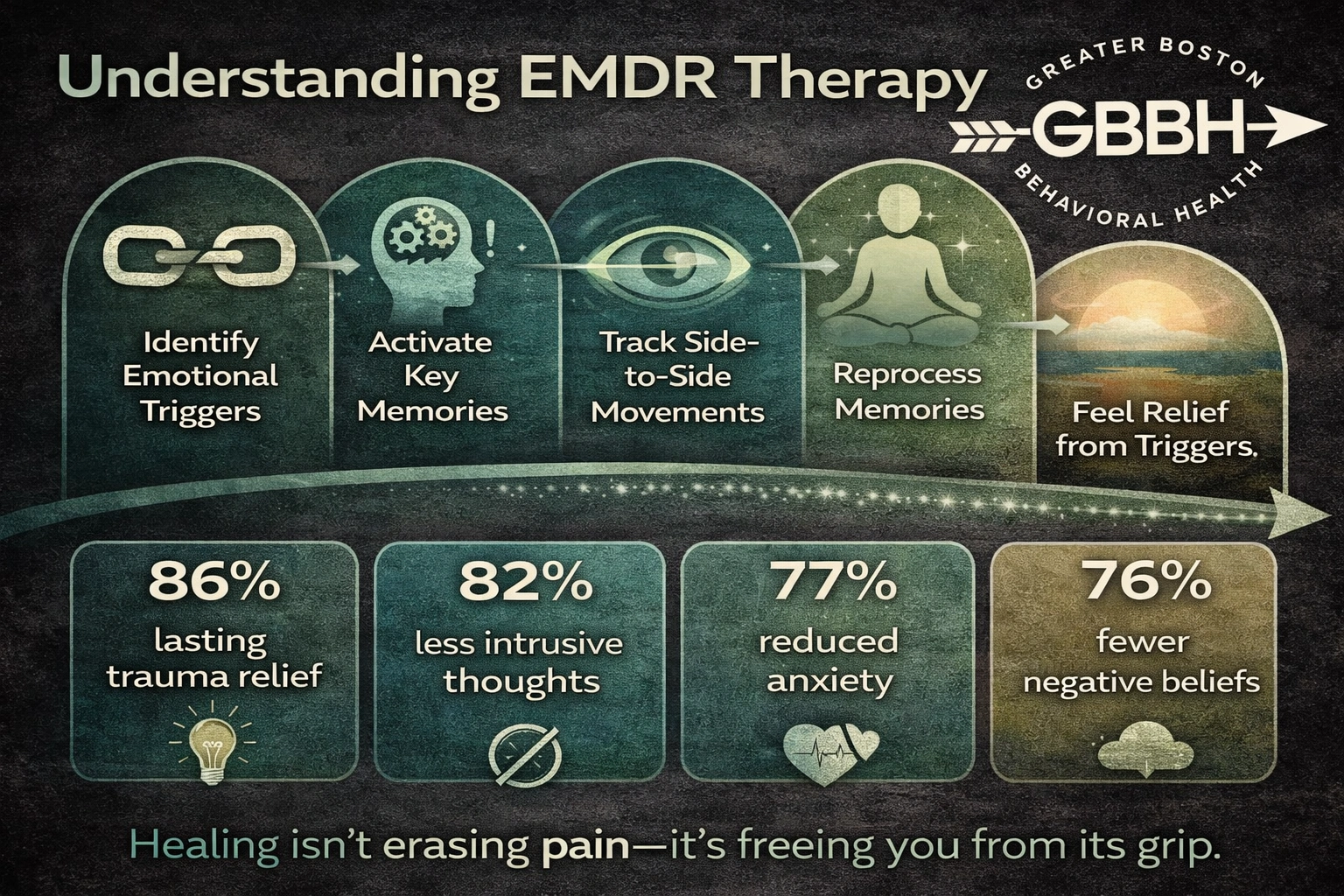
1. Assessment and Target Identification
Your therapist helps you identify specific memories or experiences that still trigger emotional reactions. These aren’t always the biggest events — sometimes they’re subtle, repeated, or relational in nature.
This is done collaboratively, and you never talk about anything before you’re ready.
2. Bilateral Stimulation
During the reprocessing phase, your therapist will guide you through EMDR using one of several methods:
- Eye movements (tracking a light or finger)
- Tactile stimulation (gentle taps)
- Audio cues that alternate left and right
This bilateral input helps your brain access and reprocess the distressing memory in a way that feels contained and safe.
3. Processing
As you focus on the memory and the sensations or emotions around it, your brain begins to reorganize how that memory is stored. Stuff that used to feel alive and dangerous starts feeling less threatening.
Sessions are paced to your comfort—not rushed, not overwhelming.
4. Integration
EMDR doesn’t just reduce intensity in the moment. Over time, it helps your brain integrate the memory differently, so your emotional reactions become lighter and more grounded.
The outcome isn’t numbness — it’s freedom.
How EMDR Is Different from Other Therapies
You might wonder: “Why can’t regular therapy do this?”
Here’s a simple way to understand it:
- Talk therapy is like untangling the meaning of a knot.
- EMDR is like loosening the gravity that keeps the knot tight.
Both are valuable. But when trauma is stored in the body and nervous system, insight alone may not be enough to release it. EMDR addresses the biological imprint of that memory — the way your nervous system experiences it.
This distinction is why people who’ve already done “everything else” still find EMDR transformative.
Who EMDR Can Help
You don’t have to have a dramatic or extreme trauma history to benefit from EMDR. Many people who seek EMDR say things like:
- “I’ve always felt a heaviness I couldn’t explain.”
- “Certain moments still hit me like they’re happening now.”
- “I thought I was fine, until someone said I wasn’t.”
EMDR can be effective for:
- Childhood emotional pain
- Relational hurts
- Loss and grief
- Chronic stress responses
- Emotional triggers that feel disproportionate
- Anxiety and panic tied to past events
It’s not only for PTSD — it’s for any unresolved emotional charge that keeps replaying in your system.
What People Often Notice After EMDR
Everyone’s experience is unique, but here are common shifts people report:
- Memories feel less emotionally intense
- Triggers don’t instantly spiral into panic
- It’s easier to stay present without reliving the past
- Emotional reactions feel calmer and less automatic
- You feel more grounded in your body
One person described it as learning to separate the echo from the event. The memory remains, but it no longer controls the room.
That subtle freedom changes daily life in ways people don’t always predict — like responding to stress instead of reacting to it.
Does EMDR Hurt?
No — but yes, it can be emotional.
EMDR isn’t about reliving your pain in graphic detail. It’s about approaching memories in a way your brain can reorganize them. Some people feel relief in a session. Others notice shifts gradually over a few weeks.
The important thing is: you’re always in control of the pace.
You never work on a memory before you’re ready. A skilled clinician will help regulate emotional intensity so the process feels contained and supportive.
When EMDR Might Be a Good Fit for You
You might consider EMDR if:
- You feel like your past still runs your present
- You’ve tried coping strategies but they only go so far
- You get triggered by things that “shouldn’t” feel threatening
- You want healing, not just symptom management
- You’re ready to go beyond understanding to relief
If you’re in the Boston area and curious, even if you feel nervous or unsure — that’s okay. Curiosity often opens the first door in healing.
Whether you’re in the heart of the city or looking for something like EMDR in Wellesley, MA, clinicians trained in trauma‑informed care are here to walk with you, step by step.
A Simple EMDR Metaphor
Imagine your emotional memory is like a photo stuck on your screen with a bright red “alert” outline — constantly demanding attention, even when nothing harmful is happening now.
EMDR is like a gentle system update.
You don’t delete the photo.
You just let the computer stop treating it like a live alarm.
And suddenly, it doesn’t jump out at you every time you open a folder.
It just sits there — like a memory, not a threat.
Frequently Asked Questions (FAQs)
What does EMDR really do?
EMDR helps the brain reprocess distressing memories so they lose their emotional intensity. It changes your nervous system’s reaction rather than erasing memory.
How long does EMDR take?
The length of EMDR work varies. Some people notice changes after a few sessions, while deeper histories may take longer. Your clinician will help guide pacing based on your story.
Is EMDR only for severe trauma?
No. EMDR is effective for many kinds of unresolved emotional experiences — including pain that doesn’t feel “big enough” to be trauma.
Does EMDR require talking about painful memories?
Not in graphic detail. You focus on just enough information to access the emotional and physical impressions your body still carries.
Is EMDR painful?
It can be emotional at times, but clinicians are trained to help regulate the process. You’re always in a safe, controlled therapeutic setting.
Real Results Come From Real Healing
Healing isn’t about perfection. It’s not about never having a difficult day. It’s about being able to experience life without your nervous system constantly dragging you back into survival mode.
EMDR doesn’t promise that every day will be easy.
But it does promise that you can change how your body responds to what your brain has stored.
That’s the transformation people talk about.
Call (888) 450-3097 to learn more about our EMDR services in Boston, Massachusetts.
