


It’s hard to put into words what it feels like to watch your child unravel in front of you. The fear is constant. The questions don’t stop. And in the middle of it all, you’re trying to figure out what actually helps.
One approach that often brings steadiness in chaotic moments is cognitive behavioral therapy program. Not because it fixes everything overnight—but because it gives your child tools they can use when emotions feel too big to manage.
What CBT Looks Like in a Moment of Crisis
Cognitive Behavioral Therapy (CBT) focuses on the connection between thoughts, feelings, and behaviors.
When a young adult is overwhelmed, their thoughts can spiral fast—“I can’t handle this,” “Something is wrong with me,” “I’m losing control.”
CBT gently interrupts that spiral.
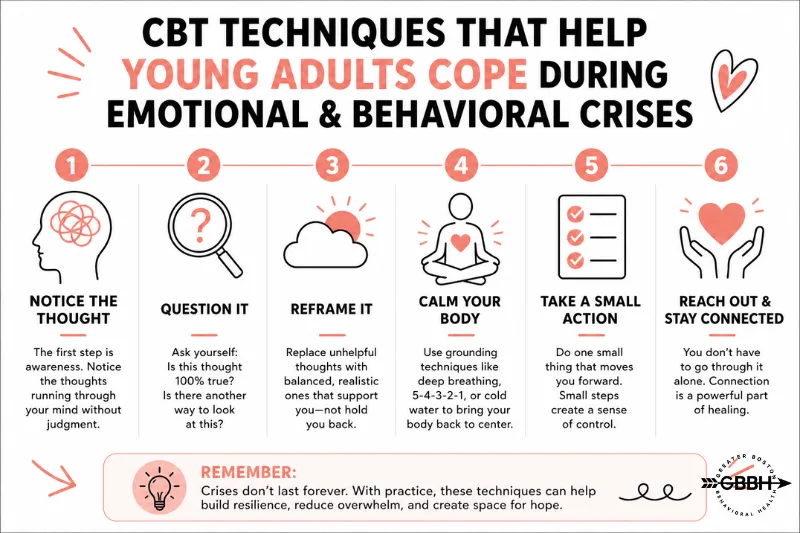
It teaches them how to:
- Notice what they’re thinking in real time
- Question whether those thoughts are accurate or helpful
- Replace them with something more grounded
In a crisis, that shift can be the difference between escalation and stabilization.
Why Emotional Reactions Can Escalate So Quickly
From the outside, it can feel sudden. One minute they’re fine, the next they’re not.
But internally, there’s often a buildup—stress, pressure, fear, self-doubt. It stacks quietly until something small tips it over.
For many young adults, moments like a panic attack at work aren’t just about the situation in front of them. They’re tied to deeper patterns:
- Fear of failure
- Feeling watched or judged
- A sense of not being “enough”
CBT helps slow that internal chain reaction down so it doesn’t keep repeating.
Grounding Techniques That Help in the Moment
When emotions spike, logic alone isn’t enough. The body has to calm down too.
CBT often includes simple grounding techniques your child can use anywhere:
- Name 5 things you can see – brings attention back to the present
- Slow breathing – signals safety to the nervous system
- Cold water or texture focus – interrupts emotional overwhelm
- Counting backwards – redirects mental energy
These aren’t complicated tools. But in the right moment, they can help your child feel like they’re not being swept away.
Reframing Thoughts Without Dismissing Feelings
One of the biggest fears parents have is: “What if they think we’re minimizing what they’re going through?”
CBT doesn’t dismiss feelings. It respects them—but it also creates space around them.
Instead of:
- “This is unbearable”
It becomes:
- “This feels intense, but it will pass”
That small shift matters. It keeps the feeling from becoming the whole story.
Building Emotional Awareness Over Time
CBT isn’t just for crisis moments. It builds awareness over time.
Your child begins to notice patterns like:
- What triggers their anxiety
- How their thoughts shift under stress
- What helps them recover faster
That awareness creates something powerful: predictability.
And predictability can reduce fear—for both of you.
What Parents Can Hold Onto Right Now
You don’t need to have all the answers.
What helps most is staying steady while they learn how to steady themselves.
That might look like:
- Listening without rushing to fix
- Reminding them they’re safe
- Encouraging small steps instead of big solutions
There’s no perfect response in these moments. Just presence.
And sometimes, that’s what they remember most.
You’re Not Powerless in This
It can feel like you’re watching from the outside with no way in. But support, structure, and the right tools can shift things.
CBT gives your child a way to understand what’s happening inside them—and a way to respond differently next time.
And that “next time” is where change begins.
If your family is navigating moments like these, you don’t have to figure it out alone. Call (888) 450-3097 or visit our cbt services to learn more about how support can begin.
