


I remember sitting at the kitchen table thinking, This can’t be it.
Not bad enough for a hospital. Not okay enough to ignore. Just… stuck.
If that’s where you are, you’re not alone. And there is something in between.
Right in that gray space, I found myself looking into a structured daytime care option—something that finally made sense when nothing else did.
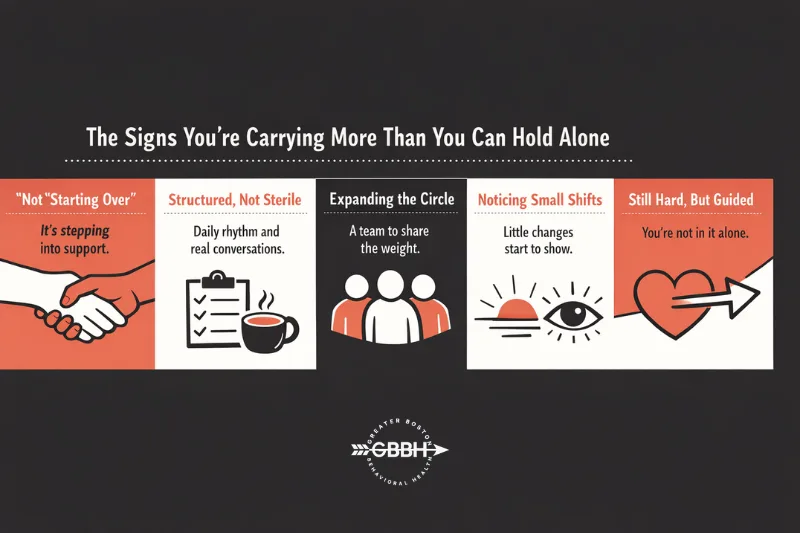
It’s Not “Starting Over”—It’s Stepping Into Support
Let’s get one thing out of the way.
Choosing a higher level of care doesn’t mean you failed.
It means things got heavy—and you’re responding.
For my family, it didn’t feel like some dramatic reset. It felt like finally admitting:
“We can’t keep pretending this is manageable at home.”
That shift matters. It softens the guilt just enough to take the next step.
The Days Are Structured—But Not Cold or Clinical
I had this image in my head—white walls, silence, people staring at the floor.
That’s not what it looked like.
Days had rhythm.
Morning check-ins. Group sessions. Breaks. Real conversations.
There was structure, yes—but it felt more like scaffolding than control.
Something to hold onto.
You’re Not Handing Your Child Off, You’re Expanding the Circle
This part hit me the hardest.
I thought enrolling meant stepping back. Losing visibility. Losing connection.
But it didn’t.
It felt more like adding people to our corner—people who knew what to look for, what to say, what not to panic about.
And honestly? That gave me room to breathe for the first time in a while.
You Start to See Small Shifts (Before Big Ones)
No overnight transformations.
But small things?
They show up.
- Getting out of bed without a fight
- Talking a little more
- Less edge, less shutdown
- A moment of eye contact that lingers
These are easy to miss if you’re exhausted. But they matter.
They’re signals—not that everything is fixed—but that something is moving.
It’s Still Hard But It’s Not Directionless Anymore
Let’s be real.
This isn’t a magic fix.
There are still setbacks. Still quiet drives home. Still nights where you wonder if it’s enough.
But it’s not chaos anymore.
There’s a plan.
There’s consistency.
There’s someone else holding part of the weight.
And that changes everything.
You Don’t Have to Know Everything to Take One Step
If you’re here, you’re probably trying to figure out:
Is this too much? Not enough? The right move?
No one hands you a clear answer.
But sometimes the next right step isn’t about certainty.
It’s about relief.
Relief that you’re not the only one trying to hold this together.
If you’ve been searching for something that feels like more than weekly therapy—but not as overwhelming as full-time care—you might be closer than you think to something that fits, like a mental health day program Boston families quietly rely on when things feel uncertain.
You’re Allowed to Need Help Too
This part doesn’t get said enough.
You’re carrying fear, guilt, exhaustion… and love that doesn’t know where to go.
That’s a lot for one person.
You don’t have to keep doing it alone.
If this sounds familiar, it might be time to explore what structured support could look like for your family. Call (888) 450-3097 or visit treatment options to learn more about our Partial Hospitalization Program services in Boston.
