


I honestly believed I was done with therapy.
Not because I was fully healed, but because I knew the drill. I’d done my time on the couch. I had a full emotional vocabulary. I could break down my triggers and regulate in public like a pro. I even knew when to schedule extra sessions if life got rough.
But there was this quiet thing beneath it all—a static, a fog, something unprocessed that didn’t budge no matter how many sessions I did.
Then someone at Greater Boston Behavioral Health asked me if I’d ever tried EMDR Therapy. At first, I laughed. I thought, “That’s for people still in the thick of it, not someone who’s already stabilized.”
Turns out, I wasn’t stabilized. I was stuck. And EMDR didn’t give me new tools—it gave me access to parts of myself I didn’t even know I’d locked away.
When Coping Becomes Another Way to Avoid
Here’s something no one tells you: Being a “good therapy client” can sometimes keep you from deeper healing.
I’d mastered the skills. I journaled. I meditated. I even helped friends interpret their triggers. On the surface, I was thriving. Inside, I was flatlining.
There were parts of my story—old trauma, messy grief, lingering shame—I never fully touched. Not because I didn’t want to. But because talking about them didn’t move anything.
I could tell you what happened. But I couldn’t feel it without spiraling or shutting down.
That’s where EMDR offered a new language.
My First Reaction to EMDR? Skepticism.
I didn’t want woo. I didn’t want a miracle. I wanted something real.
And eye movements? Tapping? Seemed gimmicky. But a peer who suggested it said something I couldn’t shake:
“You don’t have to talk about it again. You just have to let your brain finish what it started.”
That hit me.
Because I’d been talking for years. I had insight fatigue.
What I didn’t have was resolution.
So I gave it one session. I figured, if nothing else, I’d confirm it wasn’t for me.
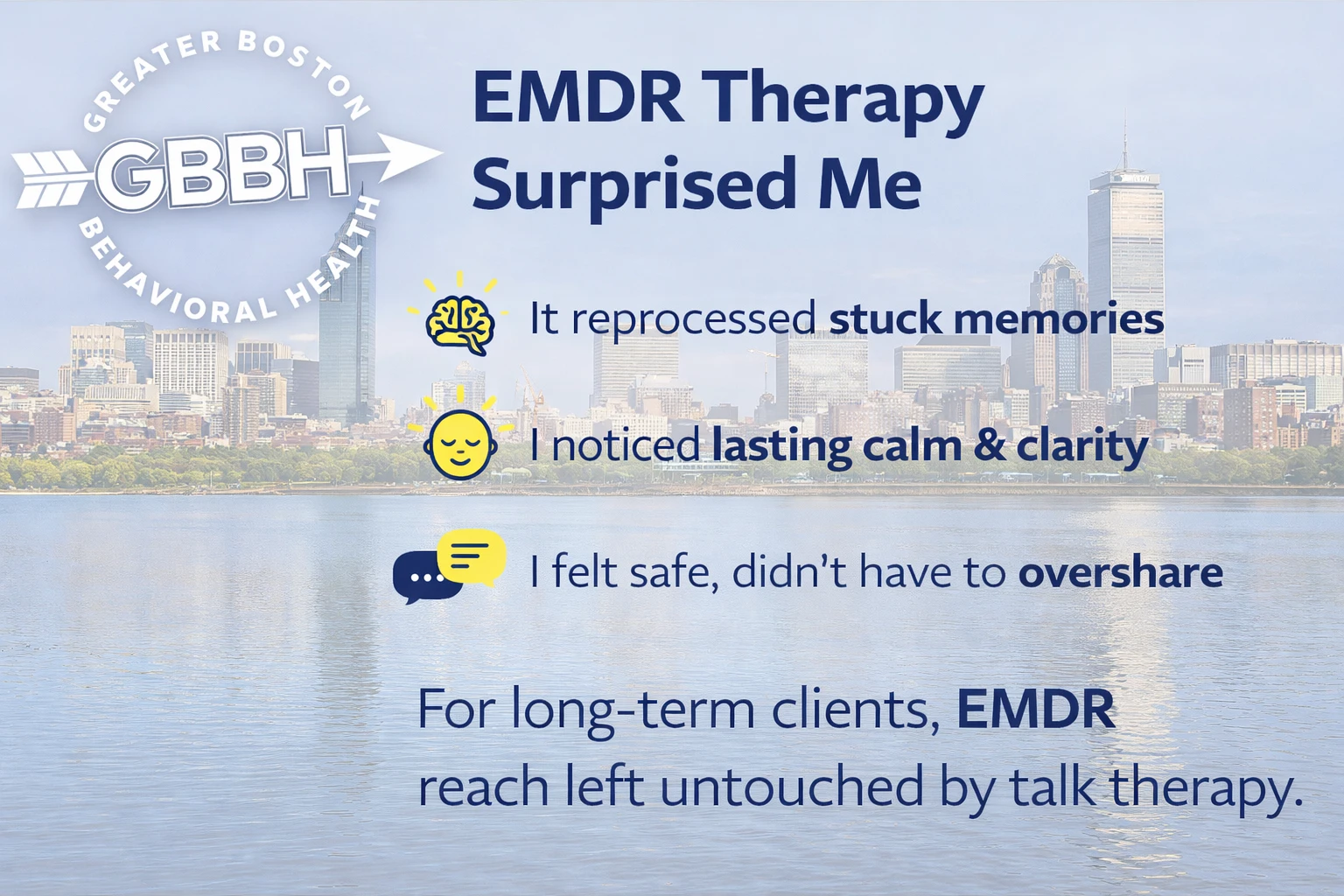
EMDR Didn’t Feel Dramatic—It Felt Quietly Powerful
What surprised me wasn’t some huge emotional release. It was the subtle shift.
I didn’t cry. I didn’t collapse.
I walked out of my first EMDR session feeling… clear.
There was no magic. Just a sense that the memory I’d worked around for years suddenly felt less charged. Like it had gone from a fire alarm to background noise.
And in the days after, I noticed something wild:
My reactions were different. Calmer. Less defensive. More grounded.
It felt like finding a window in a room I thought was sealed shut.
The Part I Didn’t Expect? EMDR Didn’t Ask Me to Perform
Talk therapy sometimes made me feel like I had to “show progress.” Say the right reflective thing. Prove I was working hard.
But EMDR wasn’t about that.
It was internal. Private.
I didn’t have to justify my pain. I just had to let my brain finish processing it.
That kind of safety? It changed everything.
EMDR Felt Like Therapy for My Body, Not Just My Brain
I’d done somatic work before, but EMDR connected it in a new way.
When I revisited an old memory, I didn’t have to analyze it. I just had to notice what happened in my body while doing the eye movements.
Sometimes I’d feel tension melt. Sometimes I’d yawn. Other times, I’d feel emotional—without words.
It was like bypassing the filter I’d built after years of traditional therapy.
The one that says, Just survive this. Just say the right thing.
EMDR asked, What if you don’t survive it? What if you let yourself heal from it?
A Small Group Session in Dedham, Massachusetts Gave Me Clarity
During one quiet group session in Dedham, Massachusetts, I noticed something shift. I didn’t break down or have a revelation—I just felt my body exhale in a way it hadn’t in years. That session marked the moment EMDR stopped feeling experimental and started feeling necessary.
After That, I Noticed My Reactions Change Back in Boston, Massachusetts
On my commute home through Boston, Massachusetts, I realized I hadn’t gritted my teeth during traffic or snapped at the stranger who cut in front of me. Small things, maybe. But they meant something bigger—my nervous system was settling. And I wasn’t forcing it. That’s when I knew the work was really starting to land.
FAQs for Long-Term Therapy Clients Considering EMDR
Is EMDR only for trauma?
No. EMDR helps with any stuck experience—grief, shame, childhood wounds, even chronic stress.
Do I have to relive painful memories?
You don’t have to describe them in detail. The work happens internally. Your therapist guides the process safely.
How does EMDR differ from talk therapy?
Talk therapy gives language. EMDR helps your body reprocess what it couldn’t at the time. Both are valuable. EMDR just works at a different level.
Can EMDR be used alongside my current therapy?
Yes, and often that’s ideal. EMDR can complement talk therapy or skills-based work beautifully.
Will I feel something right away?
Maybe. Some people feel shifts in one session. Others notice changes over time. But most feel something shift within the first few rounds.
I Didn’t Change Everything—But Everything Started to Feel Different
EMDR didn’t erase my story. It reconnected me to it—without drowning in it.
It didn’t make me someone new. It gave me back the version of me that existed before I learned to disconnect, to overanalyze, to shut down.
I thought I was done with therapy. I just hadn’t discovered the kind that could finally meet me where I really was.
Call (888) 450‑3097 to learn more about our EMDR Therapy in Boston, Massachusetts.
EMDR isn’t just for starting over.
Sometimes it’s for starting deeper.
