


I didn’t expect to love therapy. But I expected it to help.
So when I started CBT—Cognitive Behavioral Therapy—I gave it a fair shot. Showed up to my sessions. Filled out the worksheets. Did the thought logs. Tried to be a “good client.”
And when my depression didn’t magically lift, I quietly assumed what a lot of people do:
This isn’t working. I’m just too broken. CBT doesn’t work for me.
I stopped going. And for a long time, that was the story I told myself.
What No One Told Me About the “Not Working” Phase
Here’s the part I wish someone had explained: Sometimes therapy works even when it doesn’t feel like it is.
What felt like failure at the time was actually part of the process.
CBT doesn’t instantly make you feel better. It helps you see what’s contributing to how you feel—and that kind of clarity can feel hard before it feels helpful.
Back then, I wasn’t ready to sit with that kind of discomfort. I wanted out of the pain, not into the process.
But when I gave CBT another chance—this time with better expectations and a more supportive provider at Greater Boston Behavioral Health—everything changed.
Not because CBT was suddenly different. But because I was.
I Thought CBT Was Supposed to “Fix” My Thoughts
Let’s talk about that expectation.
I thought CBT meant:
- Think differently → feel better
- Catch a thought → reframe it → move on
- Identify the “distorted” thinking and it goes away
But that’s not how it works.
CBT doesn’t erase your thoughts. It helps you relate to them differently.
That meant I had to stop waiting for thoughts like “I’m worthless” or “I’m a failure” to disappear.
Instead, I started noticing them. Challenging them. Learning that I didn’t have to believe everything my brain threw at me.
It wasn’t about getting rid of the inner critic. It was about learning not to hand them the mic every time they spoke.
The Second Time I Tried CBT, I Showed Up Honestly
The first time I did CBT, I was still performing. I didn’t mean to—I just didn’t know how to be real yet.
I wanted to seem like I was trying. I didn’t want to be the “difficult” client. So I said the right things. Did the homework. Kept the sessions polite.
The second time, I let my therapist know upfront: I’ve done this before and I left because I didn’t think it worked.
She didn’t try to prove me wrong. She just said: “That’s okay. Let’s figure out what didn’t work for you—and why.”
That was the first time therapy felt like a collaboration, not a test.
CBT Works Better When You Stop Trying to Do It “Right”
I used to treat CBT like a school assignment. If I filled in the right answers on the worksheet, I thought the feelings would change.
But healing isn’t about “correct.” It’s about connection.
I had to start asking:
- What am I actually feeling right now?
- Is this thought true, or is it just familiar?
- What would I say to a friend who believed this?
That’s when CBT started to click.
Not because I was suddenly better at it. But because I stopped trying to ace it—and started using it.
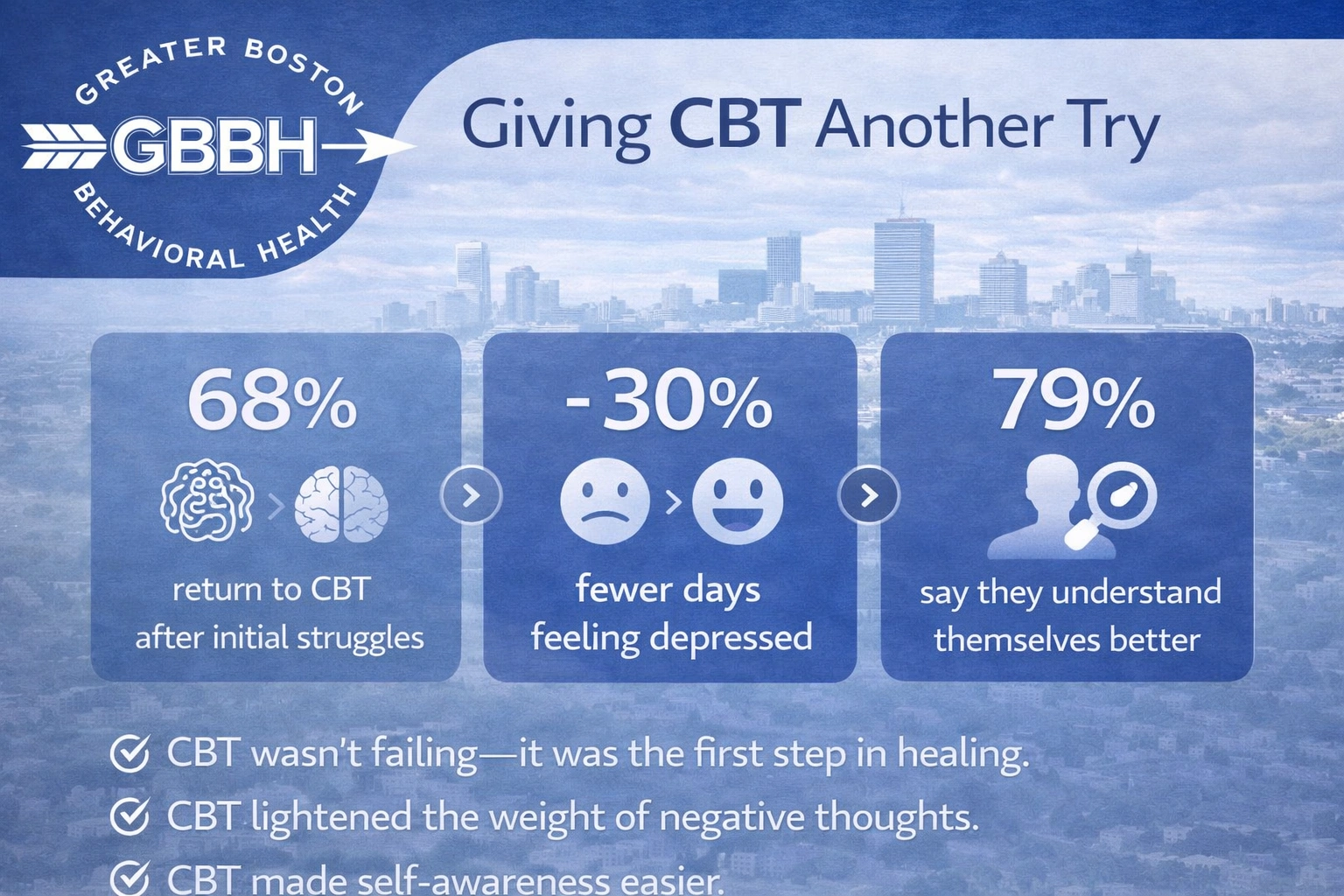
The Big Shift Wasn’t in My Mood. It Was in My Relationship With Myself
I wish I could tell you I had some huge, cinematic breakthrough.
I didn’t.
What I had was something quieter, but more powerful.
I stopped flinching every time I had a negative thought.
I stopped spiraling when a bad day showed up.
I started seeing patterns I used to be completely unaware of—and choosing differently.
I still felt sad sometimes. I still felt anxious. But I didn’t feel stuck.
And when you’ve spent years feeling like a hostage to your own mind, that kind of freedom matters.
CBT Didn’t Save Me. But It Gave Me Back the Tools I Needed to Save Myself
That’s what I tell people now when they ask if CBT “worked.”
It didn’t rescue me. But it helped me build a system of support inside myself—something that stayed with me even after the sessions ended.
It taught me that:
- Feelings are real, but not facts.
- Awareness creates space.
- I am not my worst thought.
- I can’t always change the feeling, but I can change my response to it.
That was the shift I needed.
Not a miracle. Just a method I could keep using long after therapy.
If You’re Thinking About Trying CBT Again—You’re Not Starting Over
Coming back to therapy can feel awkward.
You might think:
- “I’ve already done this.”
- “It didn’t help the first time—why would it now?”
- “Maybe I’m just not someone therapy works for.”
But here’s the thing: You’re not the same person who tried before.
You’re showing up with more insight. More clarity. More lived experience.
The work you did before? It wasn’t wasted. Even if you left early. Even if it felt incomplete.
It planted something. And you’re allowed to come back and tend to it now.
FAQs About Trying CBT Again (From Someone Who’s Been There)
What if CBT didn’t work for me the first time?
That’s more common than you think. Sometimes it’s the timing. Sometimes it’s the therapist fit. Sometimes it’s just that the work felt too hard to keep doing. Coming back with clearer expectations and support can make all the difference.
Can I try CBT without doing the worksheets?
Yes. Worksheets are a tool—not a requirement. A good therapist will adjust the approach to what works best for you. CBT isn’t about paperwork—it’s about practice.
What if I still feel skeptical?
You’re allowed to be skeptical. Therapy doesn’t require blind faith. It just asks you to stay open to the idea that change is possible—even if you don’t see how yet.
Is CBT better with a therapist than doing it on my own?
For most people, yes. Books and apps can help, but working with a trained CBT therapist provides structure, feedback, and emotional safety. It’s also easier to build momentum when someone is walking the process with you.
Where can I try CBT again?
If you’re in or near Boston, Greater Boston Behavioral Health offers CBT with licensed, compassionate clinicians who understand that not everyone gets it the first time. There’s no judgment—just support for wherever you are now.
Final Thought: You’re Not the Problem. Your Pain Is Just Loud
If therapy didn’t help before, that doesn’t mean it can’t help now.
You’re not broken. You’re not failing. You’re just in pain—and pain makes everything harder to see clearly.
Give yourself permission to come back. To try again. To want more, even if you’re scared to hope.
CBT isn’t a miracle. But it is a solid place to begin again—with support, with clarity, and with people who know how to help you build from where you are.
Ready to try therapy again—with better support this time?
Call (888) 450-3097 to learn more about CBT services in Boston, Massachusetts. No pressure. Just possibility.
