


You leave treatment thinking the hardest part is over.
Then a few quiet months pass, and something unexpected shows up: space.
If you’ve completed care and still feel a little lost, you’re not broken. Many alumni rediscover that healing continues long after formal support ends. For people who once relied on structured help like a depression treatment program, life afterward can feel both freer and strangely unfamiliar.
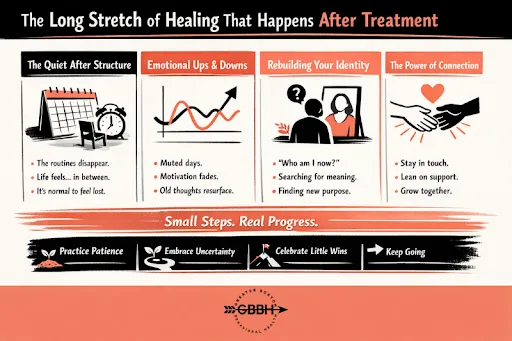
The Quiet After Structure
During treatment, your days probably had shape.
There were appointments, conversations, and moments where someone checked in and asked how you were really doing.
When that structure disappears, the silence can be confusing. Not painful exactly—just empty in places you didn’t expect.
Many alumni say the same thing:
“I thought I’d feel finished. Instead, I just feel… in between.”
That middle space is normal. Recovery isn’t a finish line. It’s more like learning how to walk again on your own legs.
Why Feeling “Flat” Doesn’t Mean You’re Failing
Sometimes people expect life after treatment to feel brighter immediately.
But emotional recovery often moves slower than symptom relief.
You might notice:
- Days that feel emotionally muted
- Motivation that comes and goes
- Old thought patterns quietly returning
- A sense that life still needs rebuilding
None of this means treatment didn’t work. It often means you’re now doing the deeper work—learning how to live, not just how to survive.
Think of it like physical therapy after surgery. The operation fixes the injury. The real strength comes afterward.
The Part No One Talks About: Rebuilding Identity
Treatment stabilizes the storm.
Afterward, a different question shows up:
Who am I now?
For many alumni, recovery becomes less about symptoms and more about identity.
You might find yourself asking:
- What actually brings me meaning?
- What do I want my life to look like now?
- How do I stay connected to the progress I made?
These are big questions. And they don’t have fast answers.
But asking them is part of healing.
The Power of Staying Connected
One thing many long-term alumni rediscover is this:
Isolation creeps in quietly.
You stop attending groups.
You stop checking in with people who understand the work.
And suddenly, you feel like you’re carrying everything alone again.
Staying connected—whether through therapy, peer communities, or alumni support—helps keep recovery alive in everyday life.
Not because you’re failing.
Because growth is easier when it isn’t happening in silence.
Small Progress Still Counts
Some days recovery looks dramatic.
Most days it doesn’t.
Most days it looks like:
- Getting through a hard morning without shutting down
- Choosing to reach out instead of isolating
- Remembering a coping skill you learned months ago
- Being honest about how you actually feel
These moments might seem small.
But they’re the bricks that rebuild a life.
Success Stories Rarely Look Perfect
When alumni talk honestly about long-term healing, the stories are rarely clean.
There are pauses. Plateaus. Periods of doubt.
But there are also powerful shifts:
- People rediscovering creativity
- Relationships slowly becoming safer
- Work and purpose returning in new ways
- A deeper understanding of themselves
The biggest success story isn’t perfection.
It’s staying engaged with your life—even when the path feels unclear.
Recovery Is Something You Practice
Finishing treatment is an important milestone.
But healing is more like a practice than a destination.
Some seasons will feel steady. Others will feel uncertain. What matters most is staying curious about yourself and remaining open to support when you need it.
If you ever feel like you’re drifting again, reaching back into care can help restore direction.
Call (888) 450-3097 or explore our depression treatment program services to learn more about continued support options.
