


Early sobriety can feel lonelier than anyone warned you about.
The chaos might be gone. The substances might be gone. But sometimes the heaviness is still there. The low mood. The flatness. The quiet sense that you thought you’d feel better by now.
If you’re asking yourself whether stepping into something like a depression treatment program will complicate your recovery plan, I want to walk through that gently with you.
This question is common. And it’s wise.
Will Treating Depression Distract Me From Staying Sober?
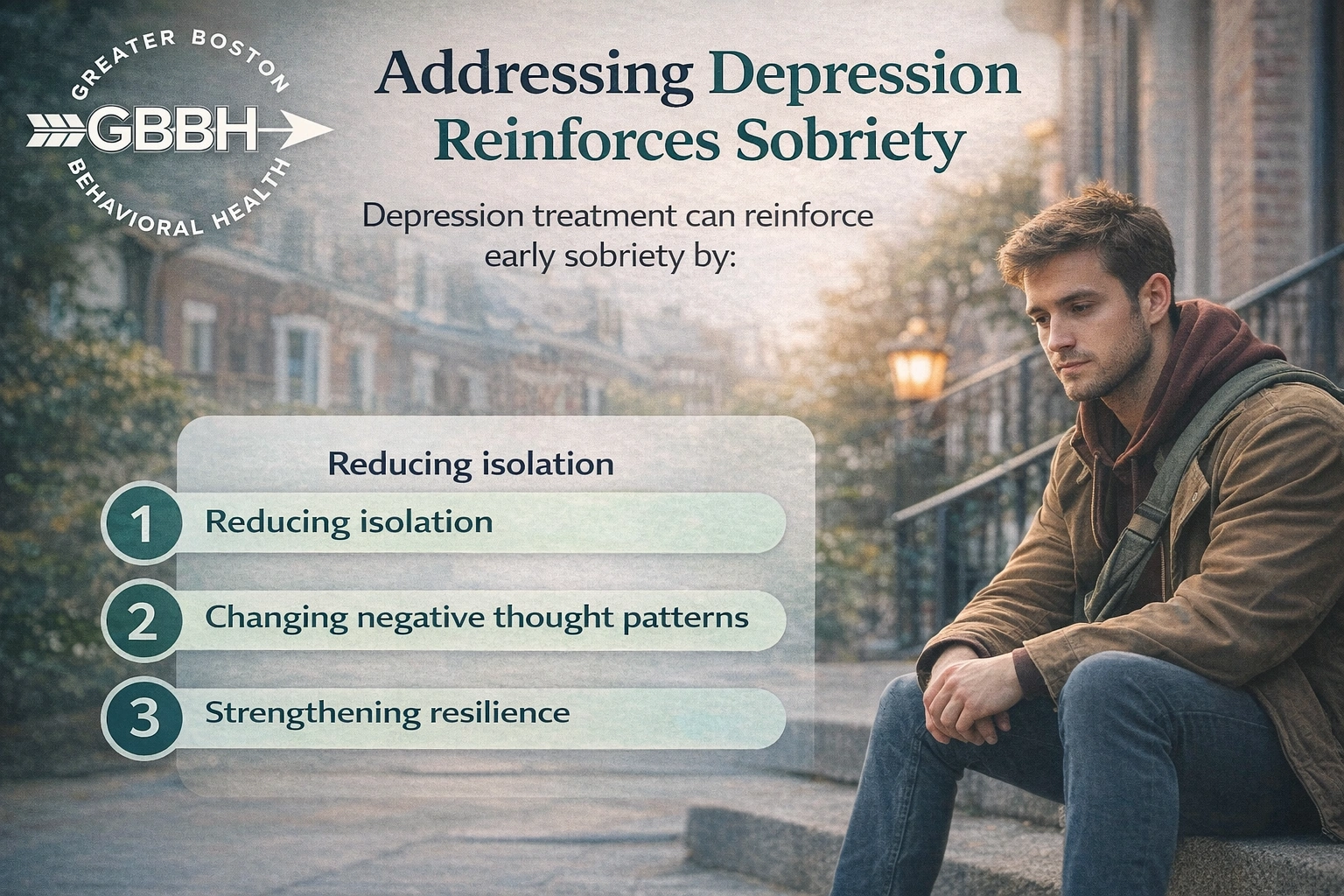
In most cases, treating depression strengthens sobriety rather than distracting from it.
Untreated depression can quietly erode recovery. It shows up as isolation. Negative thinking. Low motivation. A sense of “what’s the point?”
Those aren’t character flaws. They’re mood symptoms.
When depression is supported directly, you’re not dividing your energy between two battles. You’re reducing the emotional strain that can make sobriety feel harder than it needs to be.
Sobriety stabilizes your body. Mental health support stabilizes your thinking.
They work together.
Isn’t Feeling Sad Normal In Early Recovery?
Yes — and no.
Early sobriety brings grief. You’re letting go of something that once felt like relief. There can be loneliness. Identity shifts. Social adjustments.
Some sadness is expected.
But persistent depression looks different. It lingers. It affects sleep, appetite, focus, and energy. It doesn’t lift with time or connection.
There’s a difference between feeling your emotions and feeling swallowed by them.
If the heaviness feels constant rather than situational, it’s worth exploring more support.
Will Mental Health Support Replace My Recovery Meetings?
No.
Mental health care does not replace your recovery community. It complements it.
Meetings provide peer support and shared experience. Structured care addresses thought patterns, emotional regulation, and underlying strain.
They serve different purposes.
Many people in early recovery engage in both successfully. You don’t have to choose one path over the other.
I’m Already Exhausted. Won’t This Be Too Much?
This concern makes sense.
Early sobriety takes effort. Routine changes. Emotional awareness. New boundaries.
Adding appointments may feel overwhelming at first.
But when depression is supported, energy often stabilizes over time. Sleep improves. Mental clarity increases. Emotional swings become less intense.
Structure can feel like pressure in the beginning.
Then it starts feeling like scaffolding.
If you’re near Waltham, Massachusetts, and questioning whether you have the capacity for additional support, remember this: the right kind of structure often reduces strain instead of adding to it.
What If My Recovery Community Doesn’t Understand?
Recovery spaces vary.
Some openly discuss mental health. Others focus strictly on sobriety.
Your recovery plan should reflect your needs, not someone else’s comfort level.
If depression is affecting your sleep, concentration, or sense of hope, addressing it is not overcomplicating your plan.
It is strengthening it.
You are allowed to treat your mental health with seriousness.
Could Treating Depression Lower My Risk Of Relapse?
Yes.
Depression increases vulnerability quietly:
- Isolation deepens.
- Negative self-talk grows louder.
- Motivation fades.
- Small stressors feel larger.
These shifts do not guarantee relapse. But they can weaken resilience.
When mood is stabilized, your ability to manage stress improves. You respond instead of react.
Sobriety becomes less fragile and more grounded.
What If This Is Just Loneliness?
Loneliness is real in early recovery.
You may have stepped away from old routines. Your social environment may have shifted.
But loneliness and depression overlap.
If sadness feels heavy, persistent, and disconnected from specific circumstances, it may need more than time.
Support helps clarify what is adjustment and what is deeper mood strain.
If you’re closer to Wellesley, Massachusetts, and wondering whether your experience is “serious enough,” you don’t have to decide alone. Seeking clarity is not dramatic. It’s thoughtful.
Will I Be Defined By A Diagnosis?
This fear often sits quietly in the background.
No one wants to be reduced to a label.
Thoughtful care does not shrink you into a diagnosis. It looks at the whole picture — your strengths, your goals, your recovery journey.
Mental health support is not about redefining who you are.
It’s about equipping you with tools so you feel steadier.
A Gentle Perspective
Recovery is not only about removing substances.
It is about building a life that feels sustainable.
If depression is lingering, addressing it does not derail your sobriety.
It reinforces it.
You do not have to carry sobriety and sadness at the same time without support.
Call (888) 450-3097 to learn more about our depression treatment program in Boston, Massachusetts.
Support is not a detour.
It is reinforcement.
