


I used to say, “Treatment doesn’t work for me.”
Not quietly. Not unsure.
Confidently.
I had been to therapy. I had told my story. I had unpacked childhood memories. I understood my patterns intellectually. And yet, when something hit me sideways—a comment, a tone, a look—I reacted the exact same way.
So when someone suggested a skills-based approach like dialectical behavior therapy, I almost laughed.
Worksheets weren’t going to fix my life.
Or so I thought.
I Wasn’t Resistant — I Was Disappointed
If you’re skeptical, I get it.
I wasn’t anti-therapy. I was just tired of talking about my feelings and still blowing up at people I loved.
I could explain why I had anger issues.
I could trace my abandonment fears.
I could articulate my trauma.
And then I’d still snap in the kitchen over something small.
That’s the part no one prepares you for.
Insight doesn’t automatically equal change.
My Reactions Felt Justified
That’s what made it tricky.
When I reacted, it felt righteous.
If someone criticized me, I escalated.
If I felt dismissed, I shut down.
If I felt exposed, I attacked first.
In the moment, it felt like self-protection.
It wasn’t until someone gently said, “Your nervous system is deciding before you are,” that I realized something uncomfortable:
I wasn’t responding. I was reacting.
There’s a difference.
The Argument That Made Me Pay Attention
It started small.
A casual comment from someone close to me. Nothing extreme. But my chest tightened instantly.
My brain translated it as: You’re not enough.
Within minutes, my voice was louder. My tone sharper. I said things I couldn’t take back.
Afterward, sitting alone, I thought, “Why does this keep happening?”
Not why do they do this.
Why do I escalate like this?
That question cracked something open.
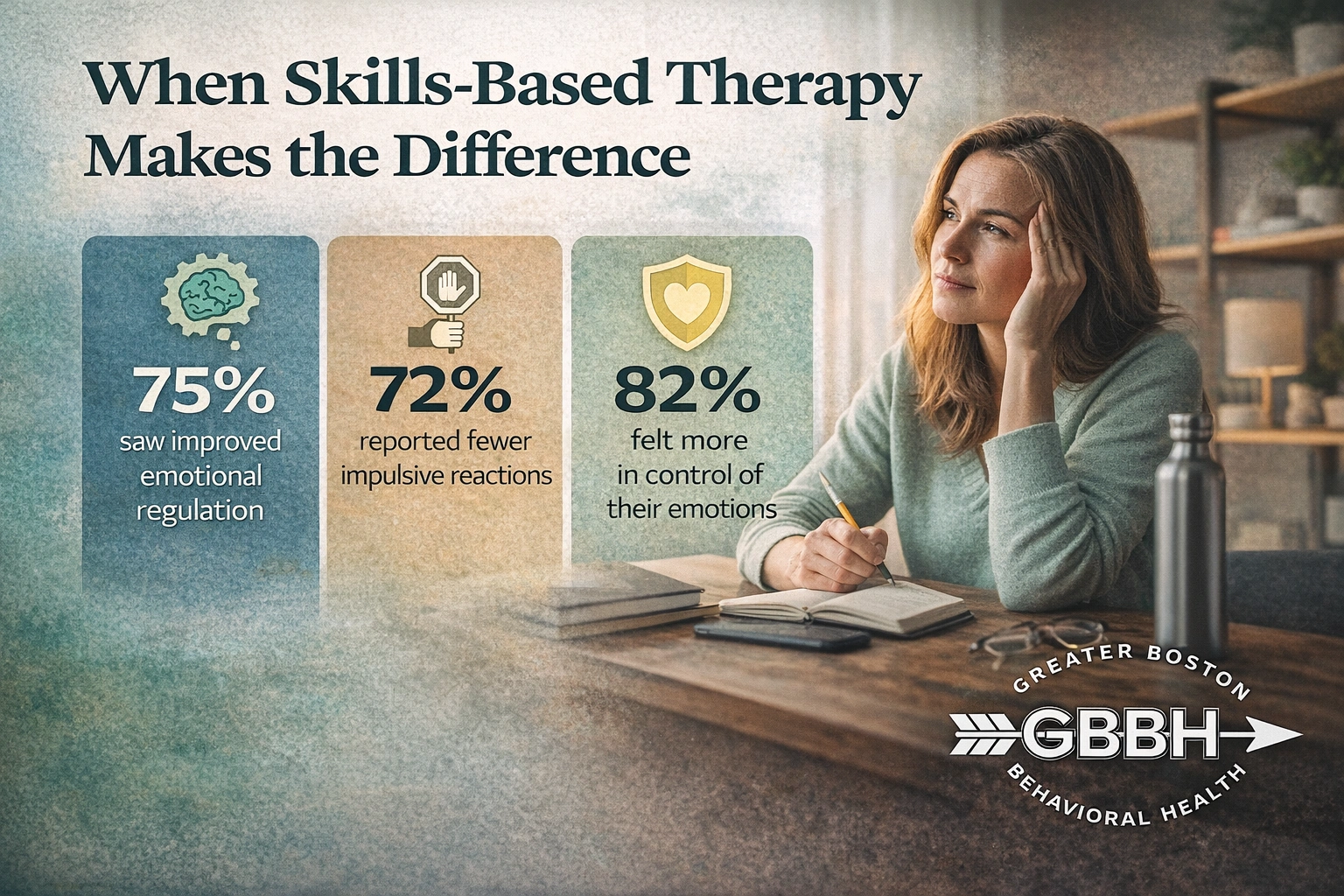
I Didn’t Have an Anger Problem. I Had a Regulation Problem.
This was the first ego bruise.
I used to describe myself as intense. Passionate. Direct.
But intensity without regulation is volatility.
When something triggered shame, fear, or rejection in me, my body reacted before my mind caught up.
Heart racing.
Heat rising.
Tunnel vision.
By the time logic entered the room, the damage was done.
That’s where dbt surprised me.
It didn’t ask me to rehash my childhood again.
It asked me to slow down my body.
And I didn’t know how.
The First Skill I Rolled My Eyes At
“Pause before you respond.”
That was the instruction.
I remember thinking, This is what I paid for?
But here’s what I didn’t understand:
My reactions were happening in seconds.
If I didn’t interrupt the physical surge, nothing else mattered.
The first time I stopped mid-argument and said, “I need a minute,” it felt awkward. Weak, even.
But I didn’t say something cruel.
That was new.
Tiny. But new.
Why My Past Therapy Felt Like It Failed
Talking helped me understand my history.
It didn’t help me regulate my present.
There’s a gap between knowing why you react and having the skill not to.
That gap is where I kept falling.
I didn’t need more awareness.
I needed tools.
When mental health and substance use collide, reactions get louder. I used alcohol to take the edge off after I’d overreacted. It felt like relief. It was actually avoidance.
Until I learned how to tolerate the discomfort underneath the urge, the pattern kept repeating.
Skills-based work changed that.
Not overnight. Not dramatically.
But measurably.
The Hard Truth: I Liked the Rush
This part is uncomfortable to admit.
There was a charge in escalation.
When I snapped back, I felt powerful.
When I withdrew, I felt protected.
When I numbed out, I felt safe.
Even if it cost me connection.
My reactions weren’t random. They served a purpose.
The problem was that the purpose was short-term.
Long-term, they wrecked trust.
In places like Dorchester, Massachusetts, where life moves fast and pressure is real, intensity can feel normal. But normal doesn’t always mean healthy.
I had to ask myself:
Was I protecting myself—or isolating myself?
The Middle Ground Felt Unnatural
One concept that shifted everything for me was this:
Two things can be true at once.
I can feel hurt and choose not to lash out.
I can feel anxious and not escape.
I can feel misunderstood and respond calmly.
Before learning these skills, everything felt binary.
Win or lose.
Attack or retreat.
Control or collapse.
Sitting in the middle felt weak.
It wasn’t.
It was emotional muscle I had never developed.
What It Felt Like the First Time I Responded Instead of Reacted
It wasn’t dramatic.
It was quiet.
Someone said something that would normally trigger me. I felt the surge. The familiar tightening.
But instead of launching into defense, I paused.
I noticed my breathing.
I felt my feet on the ground.
I let the wave peak.
It passed.
The conversation didn’t explode.
I didn’t win.
I didn’t lose.
I stayed.
That was the first time I realized I wasn’t at the mercy of my own nervous system.
Skepticism Isn’t Failure
If you think treatment “didn’t work,” I respect that.
Maybe it didn’t.
Maybe it wasn’t the right approach. Maybe it focused too much on insight and not enough on skill. Maybe you weren’t ready to admit your reactions were part of the problem.
That doesn’t make you hopeless.
It makes you human.
In communities like Dedham, Massachusetts, I’ve met many people who appear composed but internally feel chaotic. The skepticism often hides disappointment.
You tried. It didn’t change. So you concluded it doesn’t work.
What if it wasn’t about effort?
What if it was about tools?
The Difference Between Suppression and Regulation
I used to think “staying calm” meant swallowing emotion.
That’s suppression.
Regulation is different.
It means feeling the emotion fully—without letting it dictate behavior.
That skill changed my relationships more than any insight ever did.
Arguments shortened.
Apologies became rarer.
Regret stopped being a nightly ritual.
And when I stopped numbing after reacting, the urge to numb decreased.
Because the damage was smaller.
Empowerment Isn’t Loud
It’s subtle.
It’s the moment you catch yourself before escalation.
It’s the ability to say, “That hurt,” instead of attacking.
It’s the choice to step away instead of implode.
For someone who thought therapy didn’t work, that’s not a small shift.
It’s foundational.
Structured approaches like dbt didn’t change my personality.
They gave me options.
And options are freedom.
FAQs
What if I’ve already tried therapy and it didn’t help?
That doesn’t mean you’re beyond help. It may mean the approach didn’t focus enough on building concrete emotional regulation skills. Insight alone doesn’t always change behavior.
How do I know if I’m reacting instead of responding?
If your reactions feel immediate, intense, and followed by regret, that’s a sign your nervous system may be driving the behavior before your rational mind engages.
Can someone really change their reactions?
Yes. Reactions are patterns, not personality traits. With consistent practice, the nervous system can be retrained to tolerate distress without impulsive behavior.
What if my anger feels justified?
Emotions can be valid without every reaction being effective. The goal isn’t to invalidate feelings—it’s to choose responses that align with your long-term values.
Does this mean I have to give up substances completely?
That depends on your individual situation. Often, learning regulation skills reduces reliance on substances because the underlying distress becomes manageable.
How long does it take to see progress?
Many people notice subtle shifts within weeks when practicing consistently. Sustainable change develops over time, through repetition.
What if I’m afraid to try again?
That’s understandable. Disappointment can make anyone hesitant. Trying again doesn’t mean you failed before—it means you’re willing to explore a different strategy.
If you’ve felt disillusioned by treatment before but recognize your reactions are costing you something, that awareness matters.
You don’t have to stay stuck in the same cycle.
Call (888) 450-3097 to learn more about our dbt services in Boston, Massachusetts.
