


I used to think being young and struggling meant I was dramatic.
Too sensitive. Too intense. Too much.
If you’re young and sober — or trying to be — and you feel like the “weird one” in your group, you know that quiet tension. Everyone else seems carefree. You feel heavy. Everyone else seems spontaneous. You’re calculating your mood before you even leave the house.
It wasn’t until I stepped into real support — and looked into options like this depression treatment program — that I realized I wasn’t broken.
I was overwhelmed. And I didn’t have the right tools yet.
Here are eight things that shifted for me.
1. Being “Deep” And Being Depressed Are Not The Same Thing
I used to wear my depth like a badge of honor.
I felt everything intensely. Thought about life constantly. Questioned my existence at 2 a.m. for fun.
But depth expands you. Depression narrows you.
When your thoughts stop feeling curious and start feeling repetitive… when your energy drops and nothing feels rewarding… that’s not personality.
That’s strain.
Getting help didn’t make me shallow. It gave my depth room to breathe.
2. Isolation Feels Protective — But It Turns Up The Volume
When you feel different, you pull back.
You cancel plans.
You stop responding.
You tell yourself, “It’s just easier this way.”
Isolation feels safer because no one can misunderstand you if you’re not there.
But isolation makes your inner voice louder.
In structured daytime care, I met other young people who looked put together but felt exactly like I did — anxious, flat, overthinking everything.
I wasn’t uniquely broken. I was quietly struggling.
And struggle shrinks in rooms where people say it out loud.
3. Sobriety Cleared The Fog — But It Didn’t Fix My Brain
When I stopped drinking, I thought everything would stabilize automatically.
Some things did. I wasn’t waking up regretful anymore. My anxiety wasn’t chemically amplified.
But the underlying heaviness stayed.
That confused me.
I’d think, “I’m sober. Why am I still exhausted?”
Here’s what I learned: removing substances removes distortion. It doesn’t automatically untangle thought patterns that have been looping for years.
That required deeper mental health work.
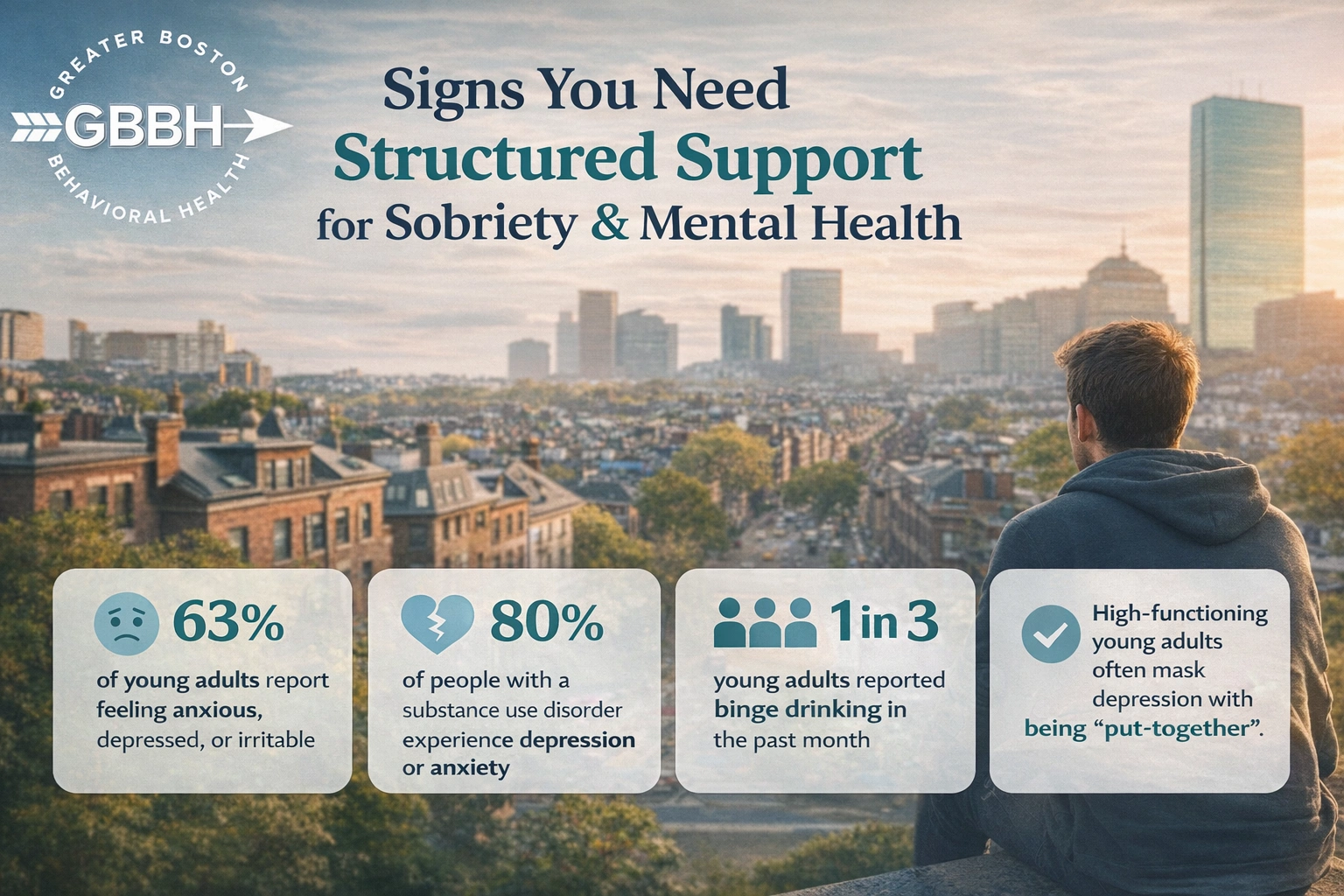
4. You Can Be High-Functioning And Still Deeply Unwell
This one hit hard.
I was going to work. Showing up to class. Meeting deadlines. Laughing at jokes.
From the outside? Functional.
Inside? Drained.
High-functioning depression is sneaky. It hides behind productivity.
In a depression treatment program setting, I realized how many young adults are surviving on fumes. Smart, capable people who are exhausted from pretending they’re fine.
Functioning is not the same as thriving.
And you deserve more than just functioning.
5. Feeling “Different” Isn’t A Defect
When you’re the only sober one at the party, you notice it.
When you’re the only one who leaves early because your social battery is shot, you notice it.
When you’re the only one thinking about your mental health instead of just winging it, you definitely notice it.
I used to interpret that difference as a flaw.
But here’s what shifted:
Different often just means aware.
You’re paying attention to patterns your peers might not be ready to look at yet.
If you’re in or around West Roxbury, Massachusetts, and you feel out of sync with the culture around you, that doesn’t mean you’re behind.
It might mean you’re ahead in ways that don’t look flashy.
6. Your Brain Isn’t Betraying You — It’s Stuck In A Pattern
For years, I treated my mind like an enemy.
Why can’t I just chill?
Why does everything feel heavier for me?
But in treatment, I learned something simple:
Your brain adapts to stress.
Sometimes it adapts by becoming hyper-alert. Sometimes by shutting down. Sometimes by looping negative thoughts because it thinks that’s protective.
Those patterns aren’t personality.
They’re habits.
And habits can change.
That was the first time I felt hope without pretending everything was fine.
7. Being Young And Sober Is Socially Awkward — Full Stop
Let’s not romanticize it.
It’s awkward.
It’s awkward ordering water while everyone else orders drinks.
It’s awkward when someone says, “You’re not drinking? Why?”
It’s awkward when your friends bond over hangovers and you bond over therapy.
Add depression into that mix, and it can feel isolating.
But here’s the part no one tells you:
Confidence grows when you stop apologizing for your boundaries.
When I stopped over-explaining my choices and started owning them, the awkwardness softened.
Not because people changed.
Because I did.
8. Getting Structured Support Is Not Dramatic — It’s Strategic
This was the biggest shift for me.
I thought entering a depression treatment program meant I was weak.
What I learned is this:
Ignoring depression is easier in the short term.
Addressing it is smarter in the long term.
Looking into real treatment options in Massachusetts wasn’t about labeling myself.
It was about refusing to keep white-knuckling through life.
There’s nothing dramatic about wanting your brain to work with you instead of against you.
It’s practical.
It’s mature.
It’s self-respecting.
What Actually Changed For Me
No, I didn’t wake up one day glowing.
The change was gradual.
- My thoughts felt less absolute.
- My energy stabilized.
- I stopped assuming I was the problem in every situation.
- I stopped feeling like the odd one out in every room.
Most importantly, I stopped believing that struggling at a young age meant I was doomed.
It meant I was human.
Frequently Asked Questions
Is it normal to feel depressed in your 20s?
Yes. Young adulthood is full of identity shifts, pressure, comparison, and instability. That doesn’t mean depression should be ignored — but it does mean you’re not uniquely flawed.
If I’m sober, shouldn’t I feel better automatically?
Sobriety removes chemical interference. It doesn’t automatically resolve underlying thought patterns, trauma, or mood disorders. Sometimes deeper support is necessary.
What if my friends don’t get it?
They might not. And that’s okay. You don’t need everyone to understand your mental health choices. You need support that actually helps you function and feel stable.
Does getting help mean I’m weak?
No. It means you’re paying attention to your patterns instead of waiting for things to implode.
How do I know if I need more than just “time”?
If your low mood is persistent, your motivation is fading, your sleep or appetite is shifting, or you feel stuck in repetitive negative thoughts — it may be time to explore structured care.
What if I’m scared of being labeled?
That fear is common. But seeking support doesn’t reduce you to a diagnosis. It gives you tools to feel more like yourself.
If You’re The “Weird One” Right Now
If you’re young, sober, and slightly out of sync with everyone around you, I want to say this plainly:
You are not behind.
You are not too sensitive.
You are not dramatic for wanting stability.
Sometimes being the “different” one just means you’re brave enough to look at your mental health instead of numbing it.
And that courage will serve you long after the awkward phase passes.
Call (888) 450-3097 to learn more about our depression treatment program in Boston, Massachusetts.
You’re not the only one who feels different.
You’re just one of the few willing to deal with it honestly.
