


When your child starts using again—after treatment, after hope, after hard-won progress—it can feel like watching a movie play in reverse. All that ground you thought they’d gained, slowly slipping out from under them. Or maybe it’s not slow. Maybe it’s sudden. A crisis. A relapse. A terrifying phone call.
Either way, you’re left staring at a version of your child you don’t recognize. And asking questions that don’t seem to have answers.
What happened?
Why now?
How do I help this time—without getting crushed in the process?
At Greater Boston Behavioral Health, we talk to parents like you every day. People who are terrified, exhausted, and still—somehow—hoping. You love your child. You want them to heal. But you also need help for you.
That’s why residential treatment programs don’t just serve the person in crisis. They support the whole family system—especially parents.
This blog walks through how a well-designed residential treatment program can bring structure to chaos, clarity to confusion, and—most importantly—connection to a relationship that may feel completely fractured.
Residential Treatment Creates a Safe Reset for Your Child
When young adults spiral back into dangerous behavior—whether it’s substance use, anger outbursts, or mental health instability—it’s often because they’re caught in patterns they can’t break alone.
That’s where a residential treatment program steps in.
In this setting, your child lives on-site in a structured, supportive environment designed to lower risk and increase stability. Every day includes clinical support, emotional guidance, and predictable routines.
But it’s not just about keeping them “safe.” It’s about giving them space to reflect without the distractions, denial, or daily stressors that kept them stuck. For many parents, just knowing their child is sleeping, eating, and not actively in danger can lower the emotional temperature enough to begin their own healing process, too.
It’s Not Just About the Client—Parents Are Involved, Too
Many parents worry they’ll be left out once their child enters a residential program. That it’ll become “between them and the facility.” But effective programs understand that healing doesn’t happen in a vacuum.
At GB Behavioral Health, families are part of the process. Depending on your child’s treatment plan and clinical readiness, we may include:
- Weekly family check-ins with a therapist or case manager
- Therapeutic family sessions to repair ruptured communication
- Parent-only education sessions to help you understand what your child is learning—and how you can support it without enabling
- Clear, compassionate boundaries so you’re not guessing or spiraling between updates
The goal isn’t to pull you into every detail. It’s to make sure you’re supported, informed, and respected as a central part of the recovery process.
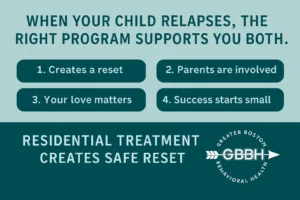
Your Love Still Matters—Even If They Say It Doesn’t
Let’s be honest. When your adult child is using again, they may treat you like the enemy.
They might say hurtful things. Refuse to answer your calls. Blame you. Or act like they don’t care at all.
But here’s what we see from inside the treatment setting: your love is still in the room with them. Even if they’re not talking to you. Even if they say they “don’t care.”
We’ve watched clients carry letters in their pockets, reread voicemails, or cry when a parent agrees to attend a family session. We’ve heard young adults say things like, “I didn’t think they’d still show up for me.”
They don’t always say it directly. But your steady presence—your willingness to stay—makes more of a difference than you know.
Success Often Starts in Subtle, Almost Invisible Ways
Many parents are waiting for the big “a-ha” moment. The tearful apology. The dramatic commitment to change.
But the truth is, most recovery journeys begin quietly.
A morning when your child shows up to group on time for the first time in weeks.
A therapy session where they speak instead of shrugging.
A phone call that ends without yelling.
A small “thank you” instead of silence.
These are the first sparks. And they’re often what lead to deeper change.
One father from West Roxbury, MA told us about his son, who had left two programs before walking into ours with a chip on his shoulder and headphones in his ears. “I didn’t expect much,” the dad admitted. “But then I got a call—not from staff, from my son. He just said, ‘I’m still here.’ And that was enough.”
Healing doesn’t always look like transformation. Sometimes, it looks like someone deciding not to walk away again.
Parents Need Their Own Healing, Too
Let’s not sugarcoat it. This is hard. Maybe the hardest thing you’ve ever lived through. You love your child, but you’re also grieving the version of them you used to know. You’re afraid. You’re tired. You’re angry. And maybe you don’t even recognize yourself anymore.
You are allowed to feel all of that.
That’s why we encourage parents to seek out:
- Support groups for families of young adults in treatment
- Individual therapy focused on codependency, burnout, or grief
- Self-paced education on mental health, trauma, and substance use
You’re not “taking focus away” from your child by doing this. You’re strengthening the foundation that helps you keep showing up for them without losing yourself.
And yes, we can help you find that support. Whether you’re local or looking for a residential treatment program in Dedham, MA, we’re connected to resources that center both your child’s growth and your own.
What a Residential Program Really Offers—And What It Doesn’t
It’s important to be honest: residential treatment isn’t a guarantee.
It doesn’t “fix” your child. It doesn’t undo pain overnight. And it doesn’t mean they’ll never struggle again.
What it does offer is:
- A structured, accountable setting where your child can focus on healing
- Daily access to licensed therapists, support staff, and peer connection
- A reset button for relational repair—starting with the parent-child dynamic
- An opportunity to break old patterns and build new emotional skills
We often tell parents: this isn’t about a perfect outcome. It’s about creating space for something new to take root.
Frequently Asked Questions from Parents Like You
What’s the age range for residential clients?
Most programs serve young adults ages 18–30. At Greater Boston Behavioral Health, we commonly support individuals in their early 20s navigating mental health crises, substance use, or both.
How long does residential treatment last?
It depends on your child’s needs. Some stays are 30–45 days, while others may extend longer. Our team works closely with families to develop a care plan that’s clinically appropriate and sustainable.
Can I contact my child while they’re in care?
Yes, but contact is typically structured. You may start with limited phone calls or letters, then build to family sessions as your child progresses. This structure helps them focus on recovery while preserving healthy connection.
What if my child refuses to go?
You’re not alone. Many young adults are resistant at first. We can work with you on compassionate approaches to intervention, conversation scripts, or next-step planning. Pressure doesn’t always work—but invitation often does.
Is your program only for addiction?
No. Our residential treatment program supports a wide range of mental health challenges, including anxiety, depression, mood instability, trauma responses, and behavioral concerns. If your child is using substances and struggling mentally, we address both.
There’s Still Time for Things to Change
Relapse doesn’t mean everything failed. It means your child is still fighting a battle—and still needs support.
You didn’t cause this. And you don’t have to carry it alone.
Residential treatment can be a place where things stop spiraling. Where hope becomes tangible again. Where your child can begin to reconnect—with themselves, and with you.
Want to talk about what’s next?
Call (888) 450-3097 or visit our residential treatment program services in Boston, Massachusetts. And for those in Needham, Waltham, Newton, or West Roxbury, we have nearby locations to make care accessible. We’re here to support you, your child, and your family—without shame or blame.
