


I didn’t want to be “the depressed one.”
That label scared me more than the sadness itself. I had always thought depression looked a certain way—staying in bed for days, crying uncontrollably, unable to work. I was still showing up to life, just…barely. Everything felt muted. I laughed when I was supposed to, answered emails on time, even remembered birthdays. But inside, it was like someone had slowly turned down the volume on my life, and I couldn’t find the dial to turn it back up.
When I finally said to a friend, “I think something’s wrong,” they gently suggested I look into help. That word—help—sounded soft, but what it led to felt huge: a depression treatment program, therapists, group sessions, even talk of medication. I felt myself start to shrink. Was this too much? Was I overreacting?
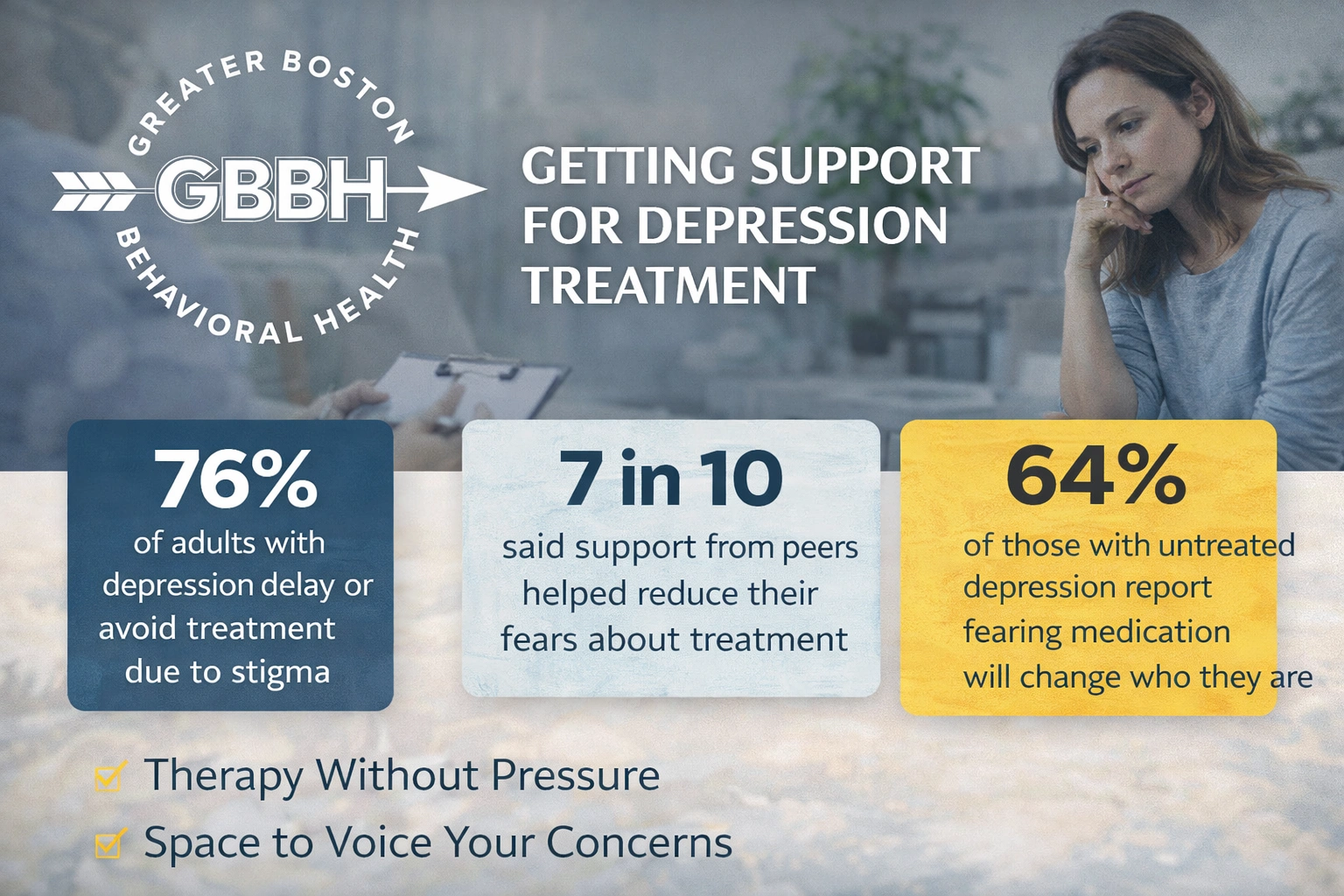
But here’s what I didn’t expect: no one pressured me. No one told me what I had to do. And that’s what gave me the courage to keep going.
I Thought Asking for Help Meant I Had to Be All In
I’d heard the stories—people who got diagnosed, took meds, and suddenly “felt like themselves again.” I wasn’t sure I wanted to feel like myself again if it meant being numb, or losing the parts of me that felt real. What if the sadness was where I kept my creativity? What if medication made me feel flat, or like a version of myself I didn’t recognize?
That fear was real. And in the program, they didn’t dismiss it. Instead, they gave me space to unpack it. Not just once, but over and over again, until it started to soften.
One of the first things a therapist said to me was, “You don’t have to decide anything today.” That line felt like a life vest. I was so used to urgency—either I was fine or I was broken, either I needed meds or I didn’t, either I was getting help or wasting everyone’s time. But in this setting, I was allowed to be unsure.
The Program Wasn’t About Forcing Me to Feel Better
There was no checklist. No “if you’re still sad by week three, we’ll have to do X.” The depression treatment program at Greater Boston Behavioral Health was structured, yes. There were group sessions, one-on-ones, psychiatry consults. But the structure wasn’t a trap—it was scaffolding. Something steady I could lean on while I figured out what healing even meant for me.
One week, we talked about identity. Not symptoms, not side effects—identity. Who we are when we’re not performing wellness. I remember someone in group saying, “I’m afraid that if I feel better, I won’t care as much.” About art, about people, about the world. That cracked something open in me.
We weren’t “resistant” or “non-compliant”—we were cautious. We were people who had been through things and were trying to protect the parts of ourselves that still felt alive.
I Asked the Same Questions Over and Over—And That Was Okay
“Will this medication change my personality?”
“Will I ever feel joy again, or just…less sad?”
“What if I try something and it makes things worse?”
These weren’t new questions. I’d googled them a hundred times at 2 a.m., scroll-searching Reddit threads and side effect lists. But saying them out loud in a room where someone was listening—really listening—was different.
My psychiatrist didn’t rush me. They explained how different medications work, what side effects to look out for, what we could adjust if something didn’t feel right. They used phrases like “we’ll try” and “you can stop if it’s not working.” It felt collaborative. Like I wasn’t a patient being fixed—I was a person being supported.
The Group Gave Me Words I Didn’t Have Yet
There’s a strange comfort in being around people who don’t need you to explain the heaviness. You can just say, “It’s one of those days,” and they nod.
In group, we talked about grief—the grief of not being who we thought we’d be by now. We shared tips that weren’t in handouts, like how to survive Sunday evenings or what foods feel manageable when your appetite disappears. And we also made each other laugh—not forced laughter, but the kind that surprises you, like a sneeze. It reminded me I was still in here, under the fog.
Someone once said in group, “I didn’t think I deserved to feel better. I thought suffering made me good.” That line stuck with me. So many of us didn’t just want relief—we wanted permission.
I Didn’t Feel Ready—But I Felt Safe Enough to Try
Eventually, I decided to try medication. Not because someone talked me into it, but because I’d been given room to want relief. I still had fears. But I also had a team who said, “You’re not alone in this.” Every adjustment was explained, every side effect tracked. When I had doubts, I could bring them into session without feeling like I’d failed.
More importantly, I wasn’t treated like a diagnosis. No one used my chart as my name. They asked about my sleep, my dreams, my jokes. They remembered my birthday. They saw me as a whole person—messy, unsure, alive.
Progress Didn’t Mean Perfection
There were still bad days. Mornings where I stared at the ceiling for too long. Nights where I cried without knowing why. But there was also something else—breath. I found myself noticing colors again. Texting friends first. Buying groceries instead of skipping meals.
One day, I realized I hadn’t googled “how long does depression last” in weeks. I was beginning to trust the process—not blindly, but gently. Like walking across a bridge that creaks, but holds.
You Can Be Scared and Still Show Up
If you’re newly diagnosed with depression and afraid of what treatment might mean—especially if the word “medication” makes your stomach clench—I want you to hear this:
You don’t have to know everything today.
You don’t have to want medication. Or therapy. Or labels.
You just have to want something different than the stuck place you’re in.
And if that’s true, even a little, then you’re ready enough to begin.
Frequently Asked Questions About Starting a Depression Treatment Program
Do I have to take medication to be in the program?
No. Medication is one option among many. At Greater Boston Behavioral Health, you’re supported whether you choose to explore medication or not. You’re never forced into a path that doesn’t feel right for you.
What if I’m not sure I really have depression?
Many people feel unsure, especially early on. You don’t need a definitive label to start receiving support. A professional can help clarify what’s going on and what might help—without pressure.
Will people judge me if I’m scared of taking meds?
Absolutely not. Fear is common, especially for people who value their emotional depth or worry about losing themselves. Your concerns will be taken seriously, and you’ll be given space to decide at your own pace.
How long is the program?
Length can vary based on your needs, but most depression treatment programs are structured to support short-term stabilization and long-term progress. The team will work with you to build a plan that makes sense for your life.
What if I try and still feel depressed?
Feeling better takes time, and it’s not always linear. The program helps you track what’s working, make adjustments, and stay connected through the hard days. Trying is not failing—it’s part of the process.
You don’t have to fix everything today. You don’t have to say yes to medication. You don’t even have to believe this will work.
You just have to believe you deserve to ask the questions.
And Greater Boston Behavioral Health is here to listen, with no pressure and no timeline but your own.
If you’re looking for support in figuring out what healing could look like for you, learn more about our depression treatment program in Boston, Massachusetts or call (888) 450-3097. We’ll meet you where you are—uncertainty and all.
