


When your 20-year-old spirals again—outbursts, silence, blame, shutdown—it can feel like déjà vu you never asked for. You thought things were getting better. Maybe there were weeks or even months of calm. And now, here you are: walking on eggshells, bracing for texts that don’t come or ones that explode with emotion.
It’s not that your child is bad or broken. It’s that they’re overwhelmed—and without the tools to manage that storm, they keep getting swept up in it.
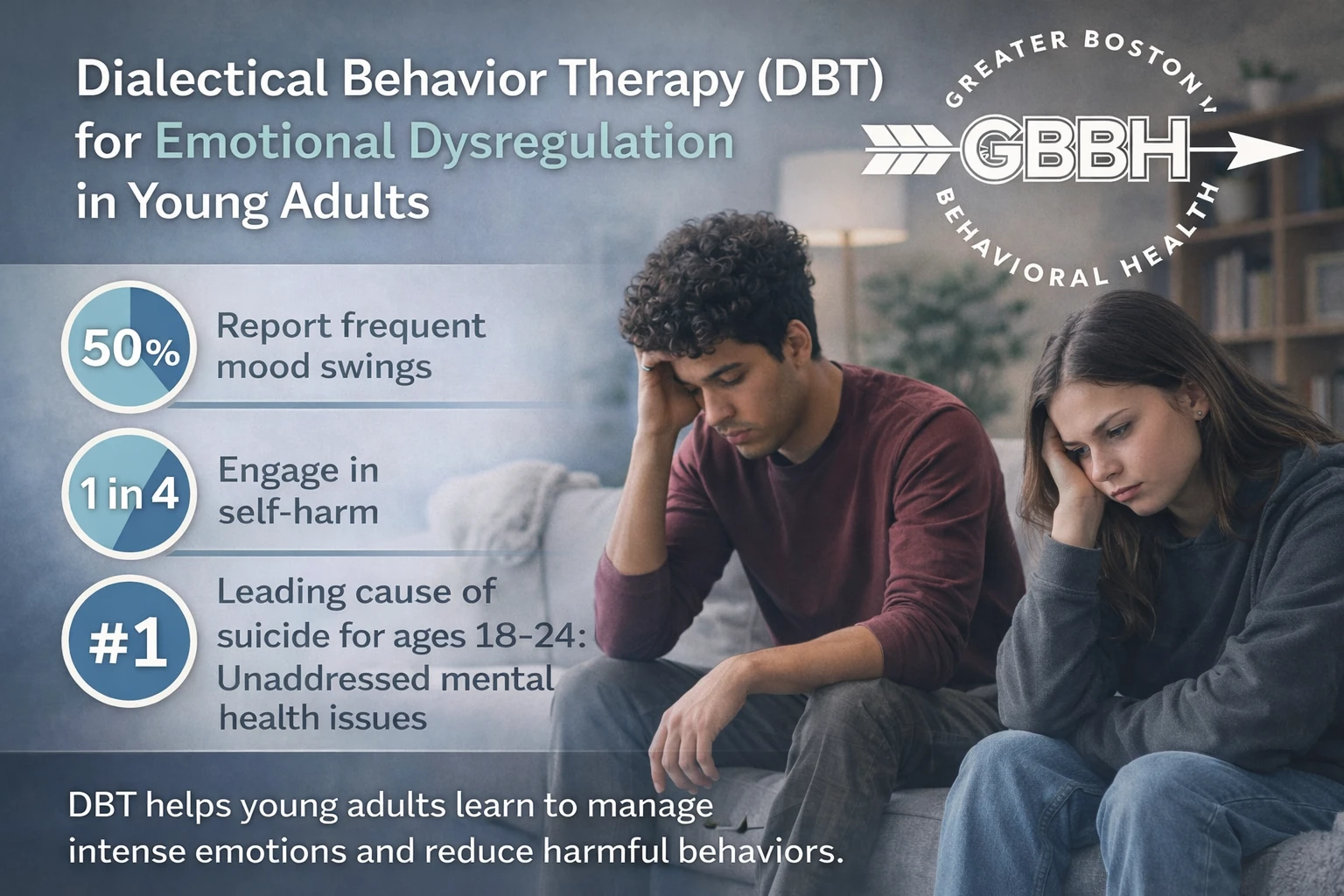
Dialectical behavior therapy, or DBT, is a treatment approach that doesn’t just talk about the storm. It teaches people how to stay grounded inside it. And for many young adults who struggle with emotional regulation, DBT has been life-changing—not only for them, but for their families.
At Greater Boston Behavioral Health in Newton, we offer DBT services tailored to the realities of young adulthood. Whether your child is in crisis again, resistant to help, or simply emotionally adrift, DBT can meet them where they are—and help them build something steadier.
When Emotional Storms Replace Conversations
Most parents don’t need a textbook definition of emotional dysregulation. You’ve lived it.
Your child might:
- Go from calm to rage in 30 seconds
- Disappear for days after a disagreement
- Threaten self-harm during intense moments
- Shut down emotionally, even when you’re trying to help
- Apologize one day and repeat the same behavior the next
This isn’t just “being dramatic.” It’s often the sign of a nervous system in overdrive—young adults who never learned how to manage emotions, so they either suppress them or explode.
DBT teaches that feelings aren’t the enemy. But unchecked emotions can wreck relationships, decisions, and self-worth. That’s where DBT steps in—not to mute emotion, but to help young people navigate it without getting pulled under.
What Is DBT—and Why Is It So Effective?
DBT (Dialectical Behavior Therapy) was originally developed for people who experienced intense emotional swings and chronic feelings of emptiness or pain. It’s since evolved into a widely used and research-backed treatment for everything from anxiety to trauma-related disorders and self-harm.
But at its heart, DBT is about two things:
- Acceptance: Learning how to live with your reality, even when it’s hard
- Change: Building skills that allow you to manage distress, not just react to it
For young adults, this balance can be a game-changer. DBT doesn’t force them to “fix” themselves. It gives them practical tools for calming down, expressing emotion, setting boundaries, and responding instead of reacting.
The Four Core Skills DBT Teaches
At Greater Boston Behavioral Health, our DBT program centers around four main skill areas:
1. Mindfulness
Helps clients stay present, observe thoughts without judgment, and reduce emotional hijacking.
2. Distress Tolerance
Teaches strategies for surviving painful moments without making them worse—like using grounding techniques instead of impulsive actions.
3. Emotion Regulation
Focuses on identifying, naming, and responding to feelings in ways that are constructive, not destructive.
4. Interpersonal Effectiveness
Builds communication skills, assertiveness, and healthy boundary-setting—especially important for repairing or maintaining relationships.
Each of these skills helps young adults learn that emotions are data, not danger. That their feelings are valid—but how they respond matters.
What DBT Looks Like in Practice
Our DBT program at Greater Boston Behavioral Health isn’t a one-size-fits-all solution. It’s a system of layered support, including:
- Individual Therapy: One-on-one sessions to process emotions and apply DBT skills
- Skills Groups: Weekly groups where clients learn and practice DBT skills in a supportive environment
- Phone Coaching (optional): Some clients benefit from between-session support to apply skills in real time
- Family Involvement (when appropriate): We help rebuild parent-child relationships through clear boundaries, emotional language, and mutual understanding
DBT works best when the young adult is open—or at least willing—to engage. But even for resistant clients, the structure, logic, and usefulness of DBT skills often break through defensiveness.
It’s Not a Magic Fix, but It’s a Real One
We’ll be honest with you: DBT doesn’t “fix” your child overnight. But it’s not smoke and mirrors either. It’s grounded, methodical, and evidence-based. It helps young adults learn how to tolerate discomfort—emotional, social, and internal—without making things worse.
That’s huge for someone who might be spiraling between numbness, panic, and confusion. It’s also a relief for you, the parent, who’s been trying to decode moods, manage crises, and hold your breath for far too long.
With DBT, your child starts to pause before reacting. They begin to understand the space between emotion and behavior. And often, they begin to reconnect—with themselves, with you, and with the life they’re trying to build.
Why DBT Is Especially Useful for Families in Crisis
If your child is using again—substances, self-harm, risky behaviors—it’s tempting to focus only on stopping the behavior. But underneath those choices are usually unaddressed feelings of pain, anger, or hopelessness.
DBT doesn’t shame the behavior. It gets curious about the pain underneath. It creates space for healing without demanding perfection. That alone can start to shift things. For your child—and for you.
And here’s the truth: If you’re reading this, you haven’t given up. You’re still trying. That matters. Your love still matters. Let us meet you there—with care, not judgment.
Why Families in Boston, MA and Dedham, MA Turn to Greater Boston Behavioral Health
We understand how deeply this hurts. And we understand how hard it is to trust a new program after others haven’t worked.
Our DBT team includes licensed clinicians trained in adolescent and young adult care, crisis intervention, and long-term emotional healing. We know what emotional dysregulation looks like up close—and we don’t flinch. We meet your child with calm, boundaries, and care.
We also offer flexibility with school and work schedules, insurance support, and family-friendly care models. Whether your child needs a full DBT track or integrated therapy with DBT techniques, we’ll guide you through it—step by step.
Frequently Asked Questions About DBT
Is DBT only for people with borderline personality disorder?
No. While DBT was originally developed for BPD, it’s now widely used to treat a range of issues including depression, anxiety, PTSD, eating disorders, and emotional dysregulation in general.
My child refuses therapy. What should I do?
Start with conversation, not confrontation. If you need support in approaching the topic, our team can help coach you on framing therapy in ways that honor autonomy and reduce resistance. Sometimes, even framing DBT as “life skills support” instead of “therapy” makes a big difference.
Will I be included in my child’s care?
We strongly believe in collaborative family care when appropriate. Many young adults benefit from optional family sessions that focus on communication and boundaries—not blame or finger-pointing.
How long does DBT take?
Our DBT programs typically run 16 to 24 weeks, depending on the structure and intensity needed. Many clients begin feeling more grounded and in control within the first month.
What if we’ve tried other therapies before?
That’s common. DBT’s structured, skills-based approach is often different from talk therapy. Many clients who didn’t feel helped by traditional therapy find DBT to be the missing link—especially when emotion regulation is the core issue.
Your Child Is Still In There. So Are You.
When your child is struggling, it’s easy to lose hope. But you don’t have to stay in this place of dread and guesswork. DBT can help your child move from chaos to clarity—one skill, one week, one choice at a time.
And you? You deserve support, too. You’ve held a lot. You’ve carried more than most people realize. Let us help carry some of it with you.
Call (888) 450-3097 to learn more about our Dialectical Behavior Therapy in Boston, Massachusetts.
