


When someone you love is deep in depression, it changes everything. Not just for them—but for you.
You see it in their eyes. You hear it in the silence that stretches longer than it used to. They stop laughing at your jokes. They forget to text back. They sleep through the day or stay up all night. They cancel plans. They lose interest in things they once loved—including you.
You might be doing your best to hold it all together, not just for them, but for both of you. And still, you wonder: Is this my life now? Is there any way back?
We want you to know: this doesn’t have to be where the story ends.
At Greater Boston Behavioral Health, we’ve seen how a structured depression treatment program can create real, lasting change—for the person struggling, and for the partner who loves them.
Depression Is a Relationship Illness
Yes, it’s a mental health condition. But depression doesn’t stay neatly inside one person’s mind. It spills over into communication, intimacy, routines, parenting, finances, daily plans. And as a partner, you often absorb the impact quietly.
You may feel like:
- You’re doing all the emotional labor
- You’re tiptoeing to avoid triggering their sadness or irritability
- You’re stuck between helping and resenting
- You’re longing for the version of them who used to show up
This tug-of-war inside you—between compassion and burnout—is normal. You don’t need to ignore your own pain to be a loving partner.
Depression treatment doesn’t just aim to “fix” your partner. It offers relief for the emotional ecosystem of the relationship. You included.
Why Therapy Alone Might Not Be Enough
Your partner might already be in therapy. Maybe they even take medication. And maybe it’s… helping, kind of. But not enough. They’re still withdrawing. Still cycling. Still not really living.
That’s where a structured depression treatment program can make a bigger difference.
Unlike traditional therapy, which may happen once a week for 45 minutes, a depression treatment program:
- Meets several times a week
- Combines individual therapy, group therapy, and skill-building workshops
- Offers psychiatric support if needed
- Provides a stable, structured environment for emotional healing
It’s more immersive—but still allows them to live at home and maintain their day-to-day life. This format helps interrupt the patterns that weekly therapy alone may not be able to reach.
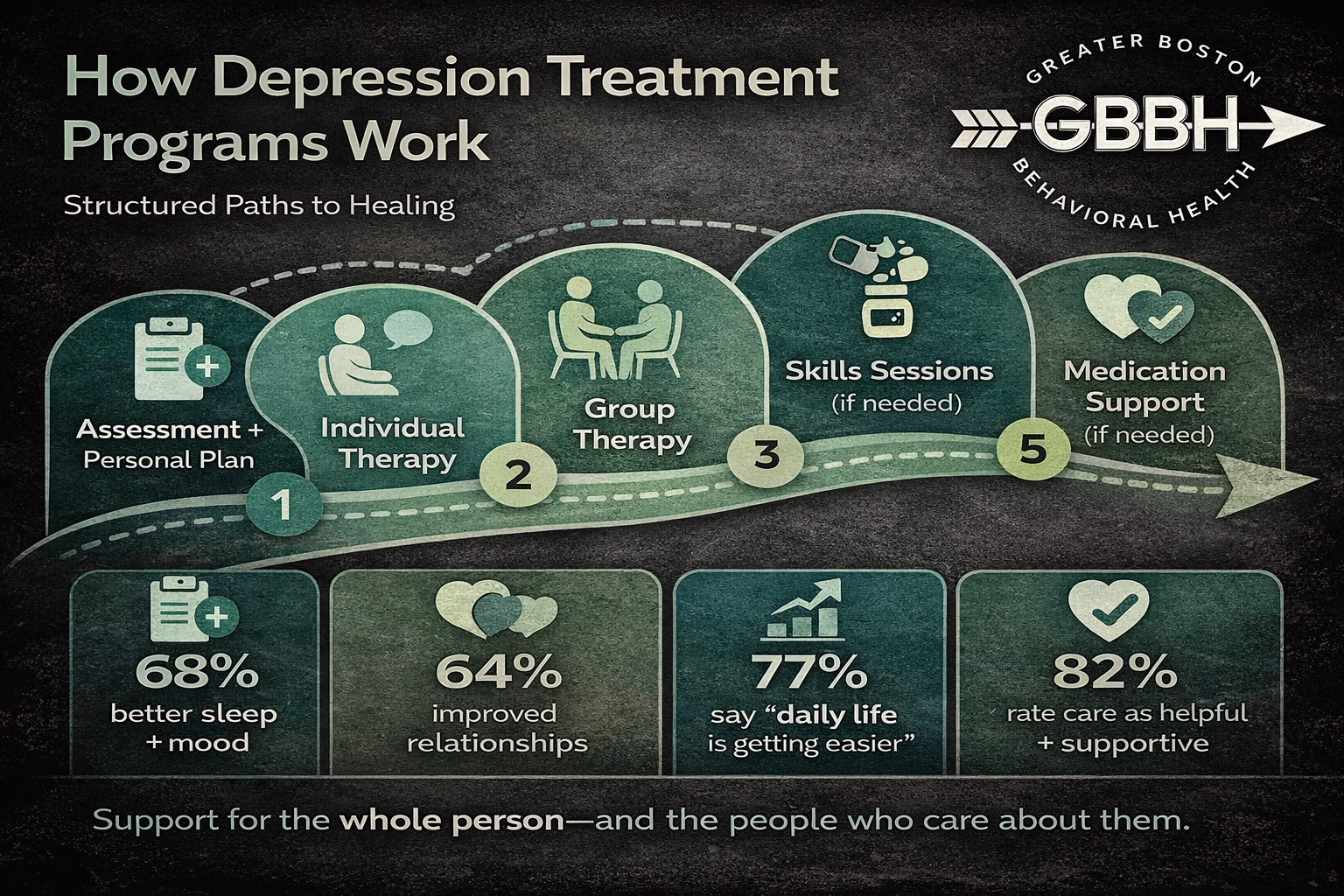
What Happens in a Depression Treatment Program?
A lot of partners hesitate to suggest a program because they don’t know what it actually involves. That’s totally fair—so here’s what your loved one can expect:
1. Assessment + Personal Plan
It starts with a one-on-one evaluation. This helps the clinical team understand what your partner is experiencing and what kind of support they need. From there, we create a customized treatment plan.
2. Individual Therapy
They’ll meet with a licensed therapist regularly. These sessions focus on uncovering root causes of depression, building insight, and learning how to manage thoughts and emotions in a healthier way.
3. Group Therapy
Group isn’t about pressure or oversharing. It’s about realizing they’re not alone. Others in the room are also navigating depression. These shared experiences create a sense of belonging, reduce shame, and foster growth.
4. Skills-Based Sessions
They’ll learn practical coping tools—how to manage stress, set boundaries, communicate more clearly, and stay grounded even during emotional storms.
5. Medication Support (if needed)
If your partner is open to it, psychiatric staff can evaluate whether medications are helping, hurting, or need to be adjusted. It’s always their choice.
What You Might Notice As They Begin to Heal
It won’t be overnight. But if they engage with treatment, you might start to see:
- A slight return of energy or motivation
- Better sleep and eating patterns
- Small sparks of joy or humor again
- More emotional availability
- A willingness to talk—and to listen
You might also notice your own tension easing. You’re not bracing every time they walk in the room. You’re not scanning for danger signs. You start feeling like a couple again—not a caregiver and patient.
It’s not perfect. But it’s forward movement. And that matters.
How to Talk to Your Partner About Getting Help
This part is scary, especially if past attempts to encourage support were met with resistance, anger, or shame.
You don’t have to push. You don’t have to solve it. You just have to open a door.
Try one of these:
- “I know things have been really hard. Would you be open to talking to someone who works with people who feel this way?”
- “I miss you. Not just physically—but emotionally. There’s a program I found that helps people with what you’re going through. No pressure. Just wanted you to know.”
- “You don’t have to be at rock bottom to get help. You just have to want things to feel even a little better.”
If they’re not ready, it’s okay. Let them sit with it. Offer to read about it together. Keep the tone loving, not corrective.
You Deserve Support, Too
Your pain matters. Your exhaustion matters. And no matter how strong you are, you aren’t meant to carry this alone.
We often encourage partners to seek their own therapy while their loved one enters treatment. You’re allowed to unpack what this has done to your heart. You’re allowed to be tired. You’re allowed to want more—for you, not just for them.
A program that helps your partner heal should also give you room to breathe.
Support That’s Local and Compassionate
If you’re based in or near Greater Boston, we’re here. Whether you’re a short drive away or looking for a Depression Treatment program in Dedham, MA, our team offers care that’s evidence-based and emotionally attuned.
We’ve helped many couples move from silence to reconnection. Not by rushing progress—but by creating space for real healing, one conversation at a time.
A Final Word for the Partner Reading This
You’ve already done more than most people would. You’ve stayed. You’ve tried. You’ve loved someone through their pain.
Let this next step be about not doing it alone anymore.
Call (888) 450-3097 to learn more about our Depression Treatment program services in Boston, Massachusetts.
Frequently Asked Questions (FAQs)
What is a depression treatment program?
It’s a structured program that provides therapy, support groups, and psychiatric care to help individuals manage depression. It usually includes multiple sessions per week and a blend of individual and group support.
Can my partner still work while attending?
Yes. Most programs—including ours—offer morning, afternoon, or evening sessions to accommodate work schedules. Your partner won’t need to take leave unless they choose to.
How long does the program last?
It depends on individual needs. Many programs run for 6–12 weeks. Some may transition clients into ongoing outpatient care or step-down options afterward.
Will I be involved in their treatment?
Sometimes. While the program primarily focuses on the individual, many include optional couples sessions or family education components. You can also request updates or coordination with their consent.
What if they refuse to go?
It’s hard—but common. The best approach is to stay loving and non-judgmental. Share resources, express your concern, and offer to walk with them if they ever change their mind. You can also seek support for yourself in the meantime.
