


You’re young. You’re sober. And if we’re being honest, you feel like the odd one out almost everywhere.
You’re not drinking at parties. You’re over the group chats that spiral into emotional chaos. You’re trying to figure out your mental health and your identity at the same time—and it’s exhausting.
If you’ve ever looked around and thought, “Why do I feel like the only one struggling this much?”—you’re not broken. You’re just not in a space that understands you yet. That’s where the right depression treatment program can change everything.
Let’s talk about what that actually looks like.
1. It Validates What You’re Feeling—Without Making It Weird
Feeling “too emotional” or “too quiet”? Always the one in the group who takes things a little deeper? Depression often shows up in young adults as overthinking, flatness, or feeling like you just can’t connect the way everyone else seems to.
In treatment, those aren’t red flags—they’re signals. Clinicians know that your feelings aren’t flaws. They’re data. They help map out what hurts and what needs care. You’re not “too much.” You’re not “not enough.” You’re just someone who’s been carrying a lot without a place to set it down.
2. It Understands the In-Between Phase You’re In
A lot of young adults in early sobriety feel like they’re stuck between two worlds: You’re not a teen anymore, but you’re not fully settled into adult routines either. You might be in college, working gigs, or still figuring it out.
A depression treatment program that’s built with young people in mind doesn’t try to treat you like a child—or like a 40-year-old with a mortgage. It meets you exactly where you are—navigating friendships, dating, identity, family pressure, and the big existential stuff that hits at 2 a.m.
This kind of care isn’t about fixing you. It’s about helping you see your life more clearly so you can move through it—not get stuck under it.
3. It Offers Group Spaces That Feel (Surprisingly) Safe
Group therapy can sound like a nightmare when you’re used to being the “quiet one” or the “deep one.” But in a good program, groups aren’t about being the loudest or most dramatic.
They’re about real conversations with people who actually get it.
The first time someone shares something and your brain goes, “Wait. Me too”—that’s when things start to shift. You realize you’re not the only one who feels like they’re pretending in every social interaction. You’re not the only one who’s sober and awkward and unsure how to talk to people now. That moment? It’s healing.
4. It Helps You Set Boundaries Without Feeling Like You’re Pushing People Away
It’s hard to say “no” when your mental health already makes you feel different. But constantly saying “yes” to protect other people’s feelings—or to avoid being alone—only burns you out.
Treatment helps you name what’s draining you and learn how to set real boundaries. That might look like not answering texts past midnight. It might mean skipping events that leave you emotionally wrecked. It might mean saying, “I’m not in a place to talk about that right now.”
You’re not selfish for needing space. You’re surviving. And with the right tools, you can shift from surviving to living.
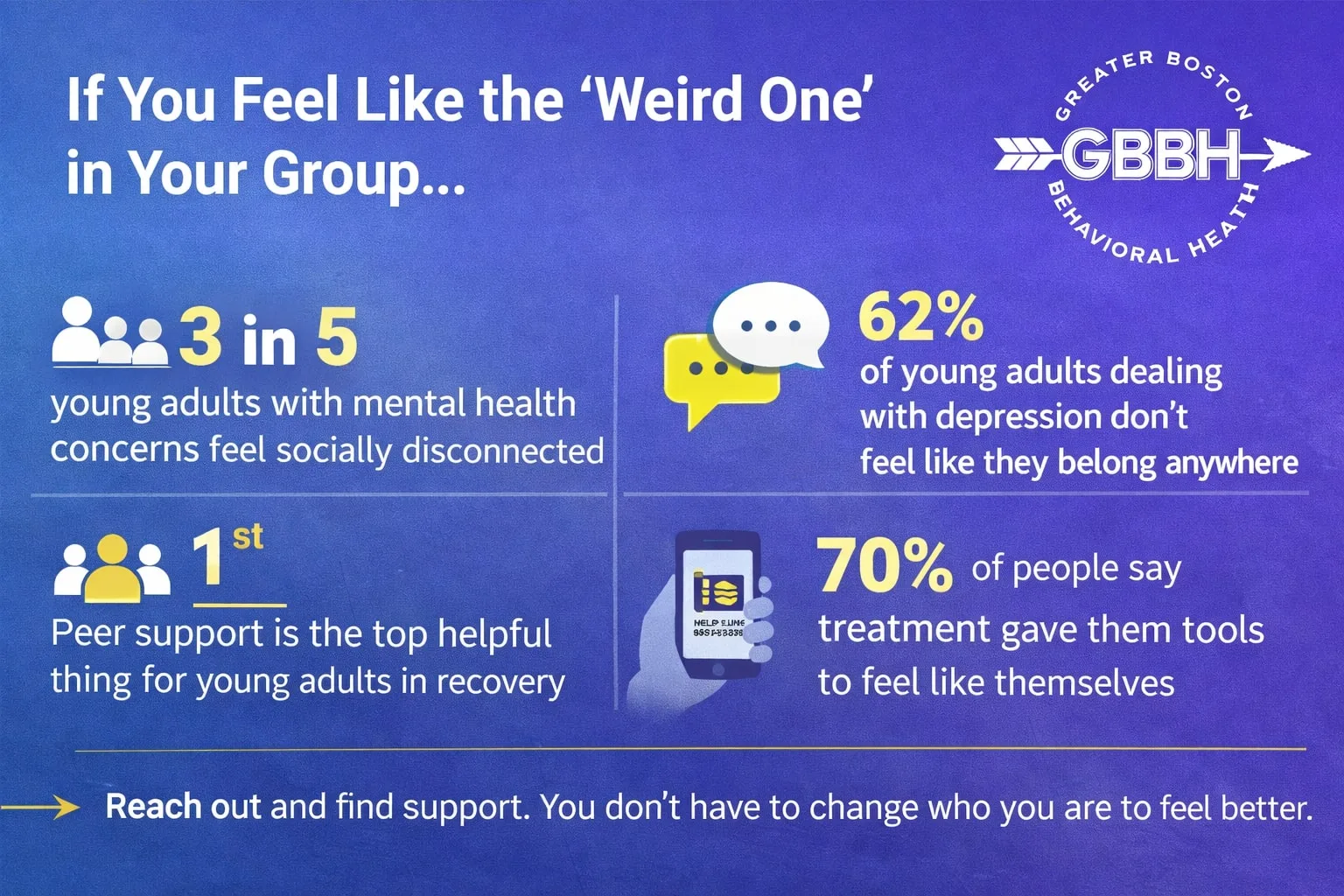
5. It Gives You a Break From Performing
You know that thing where someone asks “How are you?” and you automatically say “Good” even when your brain feels like static?
Treatment gives you permission to stop pretending.
In sessions, you can say, “Actually? I feel nothing today,” or “Everything feels too loud,” and nobody will flinch. That’s the point. No mask required. You don’t have to perform being okay while secretly melting down inside.
It’s like emotional rest. Like your brain can finally exhale.
6. It Respects Your Sobriety Without Making It Your Whole Personality
Sobriety can be lonely—especially if you’re one of the few (or only) people your age who’s doing it. But you’re not looking to make it your whole identity. You just want to feel better without having to explain it constantly.
The right depression treatment program won’t pressure you to wave a sobriety flag or go to meetings you’re not into. But it will help you understand why you used in the first place—and how to find connection, creativity, and calm without substances.
It’s not about labels. It’s about learning what actually helps you feel human again.
7. It Shows You You’re Not Alone—Even If You Don’t Talk Much
You don’t have to be the loudest one in the room to be seen. Treatment isn’t a popularity contest. Some of the most powerful work happens quietly—one-on-one, or in a moment where someone finally says, “I feel that too.”
Greater Boston Behavioral Health creates those moments by meeting people where they are. Whether you talk a lot, barely speak, or process everything a week late in your journal—there’s a place for you here.
Because being quiet doesn’t mean you don’t need support. It means you’ve been listening. And now, you deserve to be heard.
Still feeling unsure? That’s okay. Here are a few common questions young adults ask before starting treatment:
FAQ: Depression Treatment for Young Adults
Is this just talk therapy, or are there other options too?
Depression treatment often includes individual therapy, group sessions, and sometimes psychiatry or medication support—depending on your needs. At Greater Boston Behavioral Health, it’s not one-size-fits-all. Your care team builds a plan with you, not for you.
Do I have to be officially diagnosed to start?
Nope. You don’t need a diagnosis to deserve help. If you’re struggling with motivation, sadness, numbness, or just feel off, that’s reason enough to reach out.
Will they understand that I’m sober and still figuring that out?
Yes. Many young adults in treatment are exploring sobriety or maintaining it alongside mental health care. The clinical team gets it. You won’t be judged or put in a box.
What if I’ve tried therapy before and it didn’t help?
That’s more common than you think. A different setting, style, or therapist can make a big difference. If something hasn’t worked in the past, it doesn’t mean you’re “unhelpable”—it just means the fit wasn’t right yet.
Do I have to talk in group therapy?
You’re never forced to share. Group is about creating a space where you can speak if you want to—but silence is welcome too. Many people find comfort just listening at first.
You’re not broken. You’re just early in the process of building a life that actually fits.
And you don’t have to do it alone. And for those in Needham, Waltham, Newton, or West Roxbury, we have nearby locations to make care accessible.
Call (888) 450-3097 or visit our depression treatment program page to learn more about our depression treatment program services in Boston. We’re here when you’re ready.
